
Encounters with Whales: Three Oceans, Three Adventures
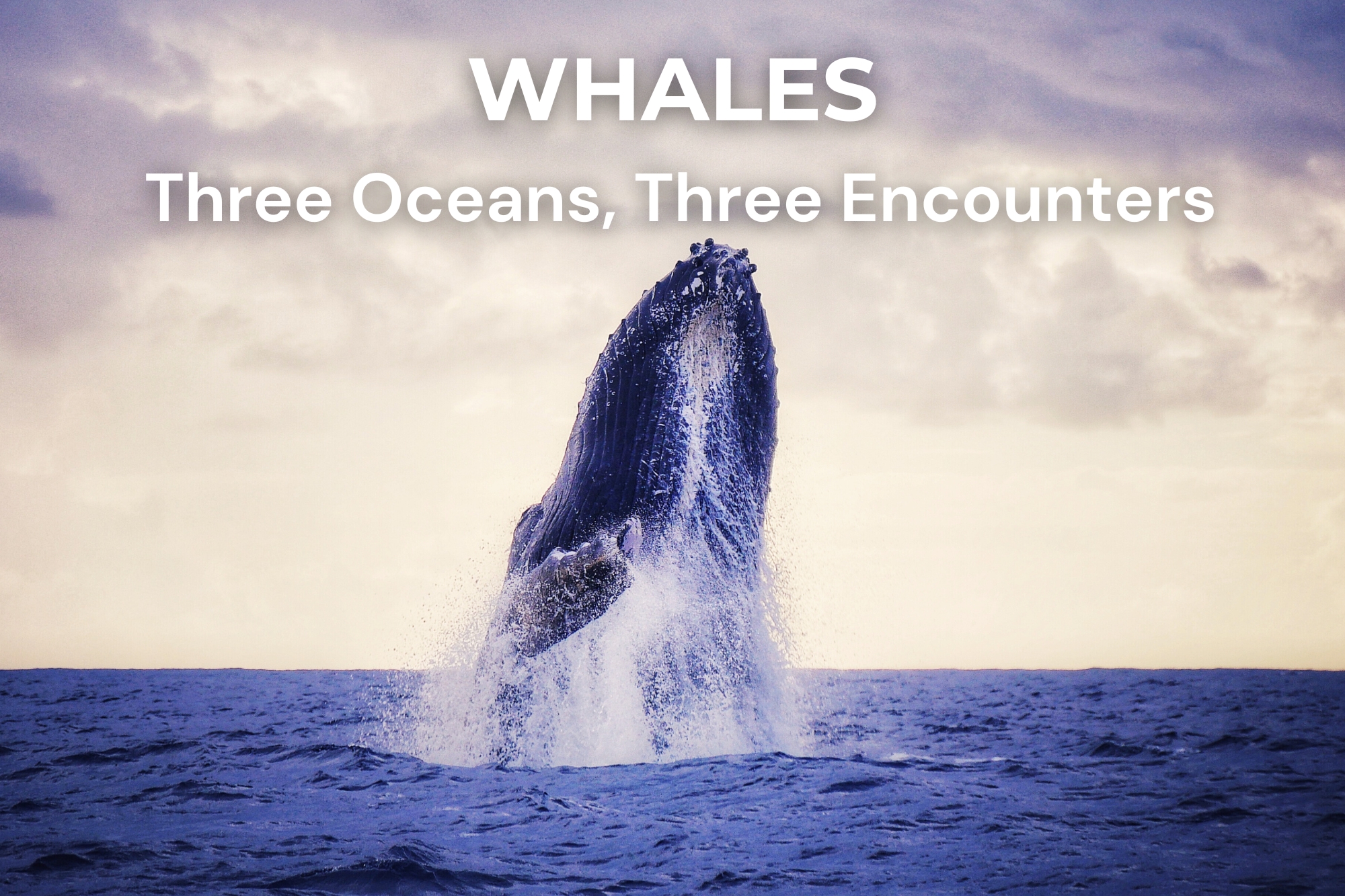
Like many people, I have always dreamed of seeing whales. The very first time was from very far away, along the Californian coast — and it was already magical. Since then, I never miss an opportunity to try to spot them and I must say I have been very lucky, having lived extraordinary moments with them around the world 😉.
Humpback whale
Who am I?
I am the humpback whale, famous for my spectacular leaps and my long pectoral fins which can measure up to a third of my body length. I can reach 16 metres long and weigh up to 30 tonnes. Every year I travel thousands of kilometres, from cold nutrient-rich waters to tropical lagoons to give birth and reproduce.
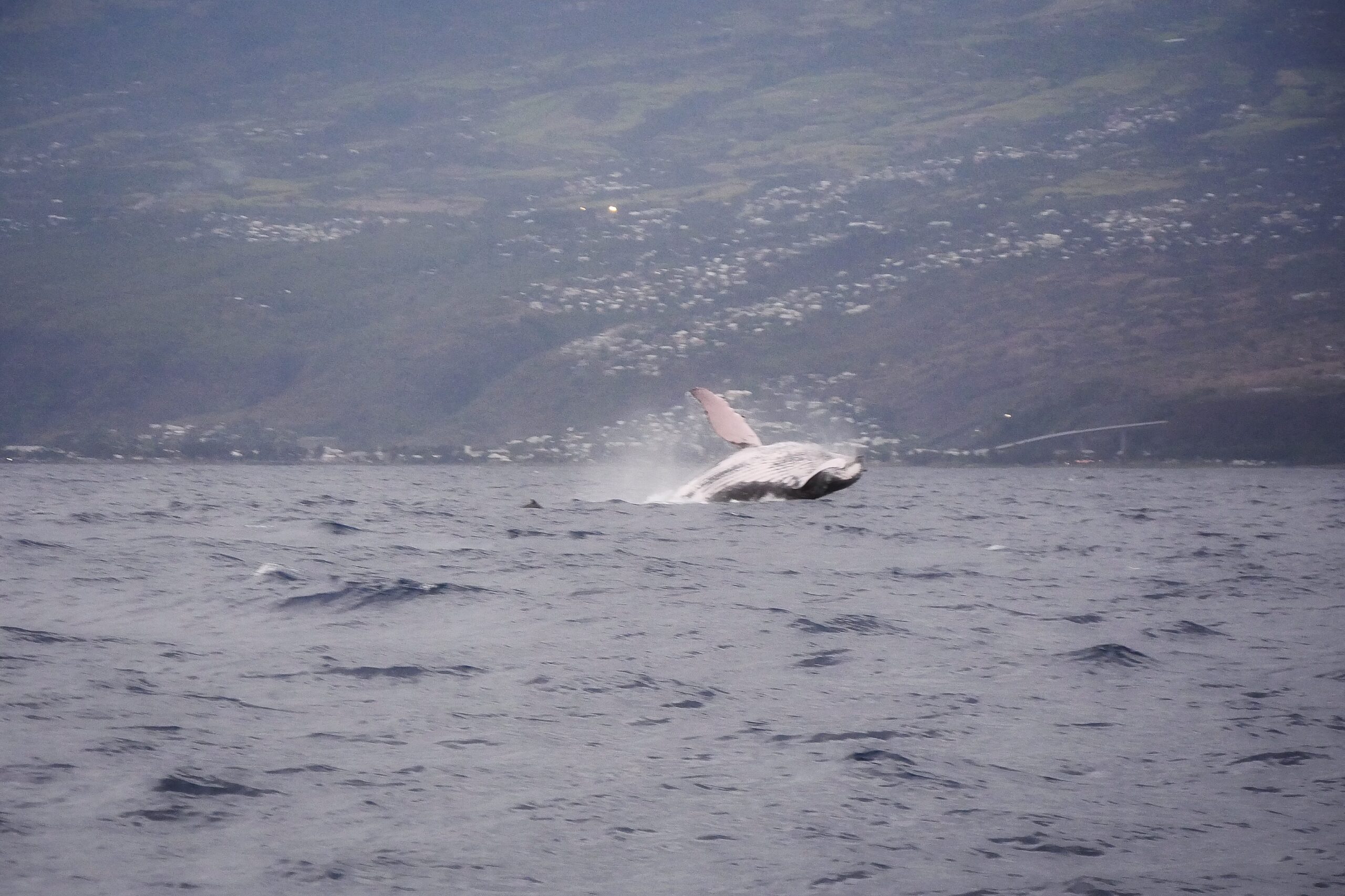
My tail fin, unique like a fingerprint, allows researchers to identify me individually. I also possess a complex song, which can last up to 20 minutes and repeat for hours. This song serves to communicate, attract a mate and mark my territory. I feed mainly on krill and small fish, which I capture using my unique bubble net feeding technique: I blow bubbles in a circle to concentrate my prey before swallowing them in one single motion.
Where to find me?
To spot me, you need to follow my migration routes. Like many whales, I alternate between two zones depending on the season: I spend the summer in the cold, nutrient-rich polar waters, then migrate towards warm tropical waters to reproduce and give birth.
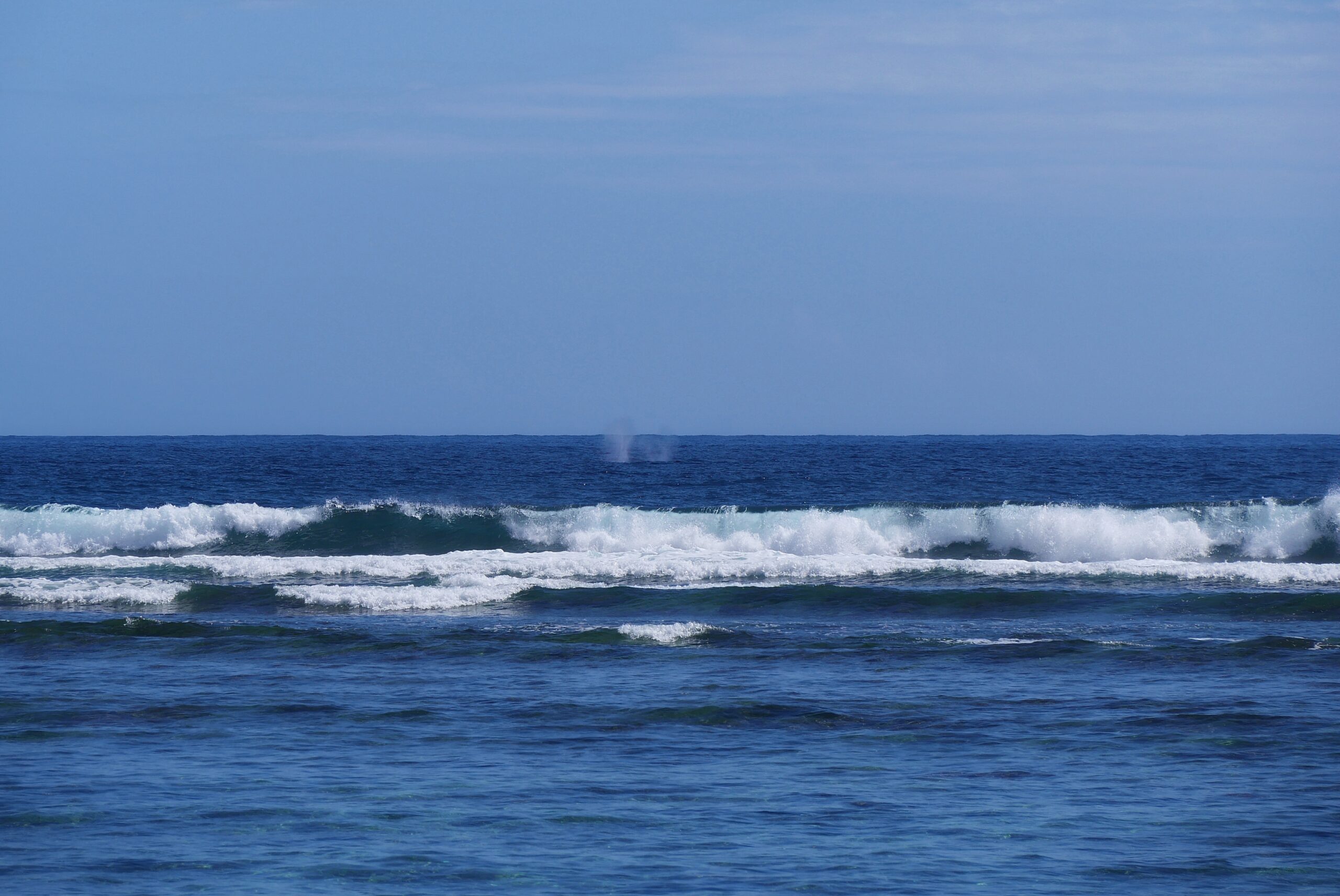
In Polynesia, I can be spotted from July to October, particularly around Rurutu, Moorea and Tahiti. Rurutu is considered one of the best destinations in the world for swimming with me!
In Reunion Island, I follow the west coast between July and September, particularly visible from Saint-Gilles. Boat trips are regularly organised by local operators. In both cases, guided boat excursions remain the best way to encounter me — and sometimes it is me who will come to you 😊! Patience and respect for the environment are essential to experience this magical encounter, and if you truly want this moment to be unforgettable, choose a responsible operator who respects my space and my rhythm.
Moorea, beneath the ocean in song
It was in Moorea, in Polynesia, that I lived one of the most beautiful experiences of my life. A friend had booked an excursion to observe humpback whales and, above all, to swim with them. The sea was rough that day and upon boarding, we were told that getting in the water would not be possible, but that we would at least go and find them. We were observing them from the boat when, against all expectations, the guides announced that we would finally be able to get in the water.
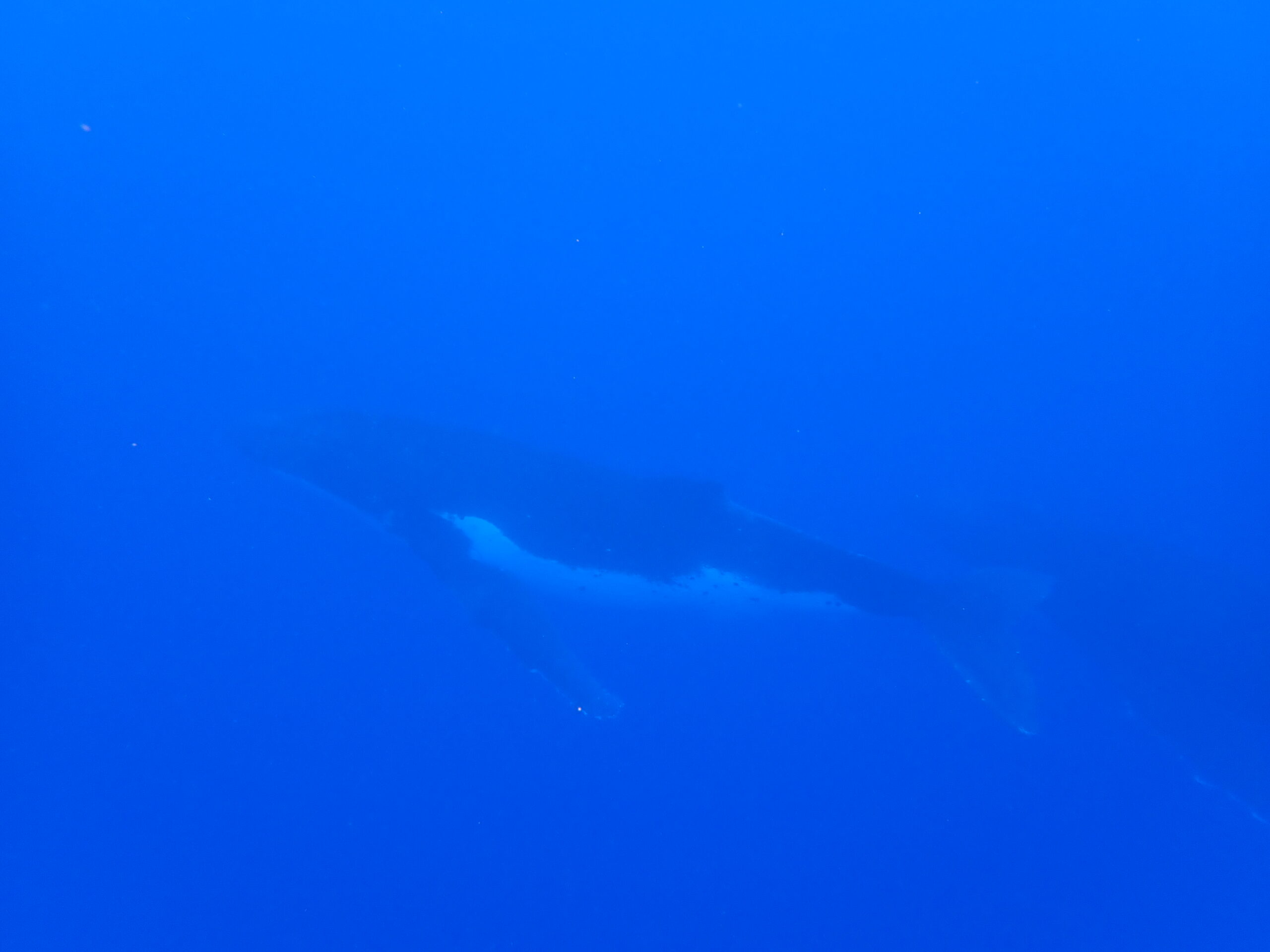
We were out in the open sea and swam for a long time, a difficult effort in that rough sea. I regularly plunged my head underwater to search for them, seeing only deep blue water with no visible bottom. And then, suddenly, I heard an extraordinary sound. It took me a few seconds to realise it was the song of the whales. I cried with joy — I never would have imagined having the chance to hear them sing. I listened to this wonderful song while continuing to search, when I made out two silhouettes rising from the depths, growing more and more imposing.
They finally passed very close to me, a mother and her calf. It was impressive, a little overwhelming, but so beautiful.
I feel truly lucky to have experienced that. And it was not my last encounter with them in Polynesia! At the end of my stay, taking off from Fakarava, I spotted their silhouettes through the window in the turquoise water below — like a final farewell.
Reunion Island, leaps, leaps and more leaps!
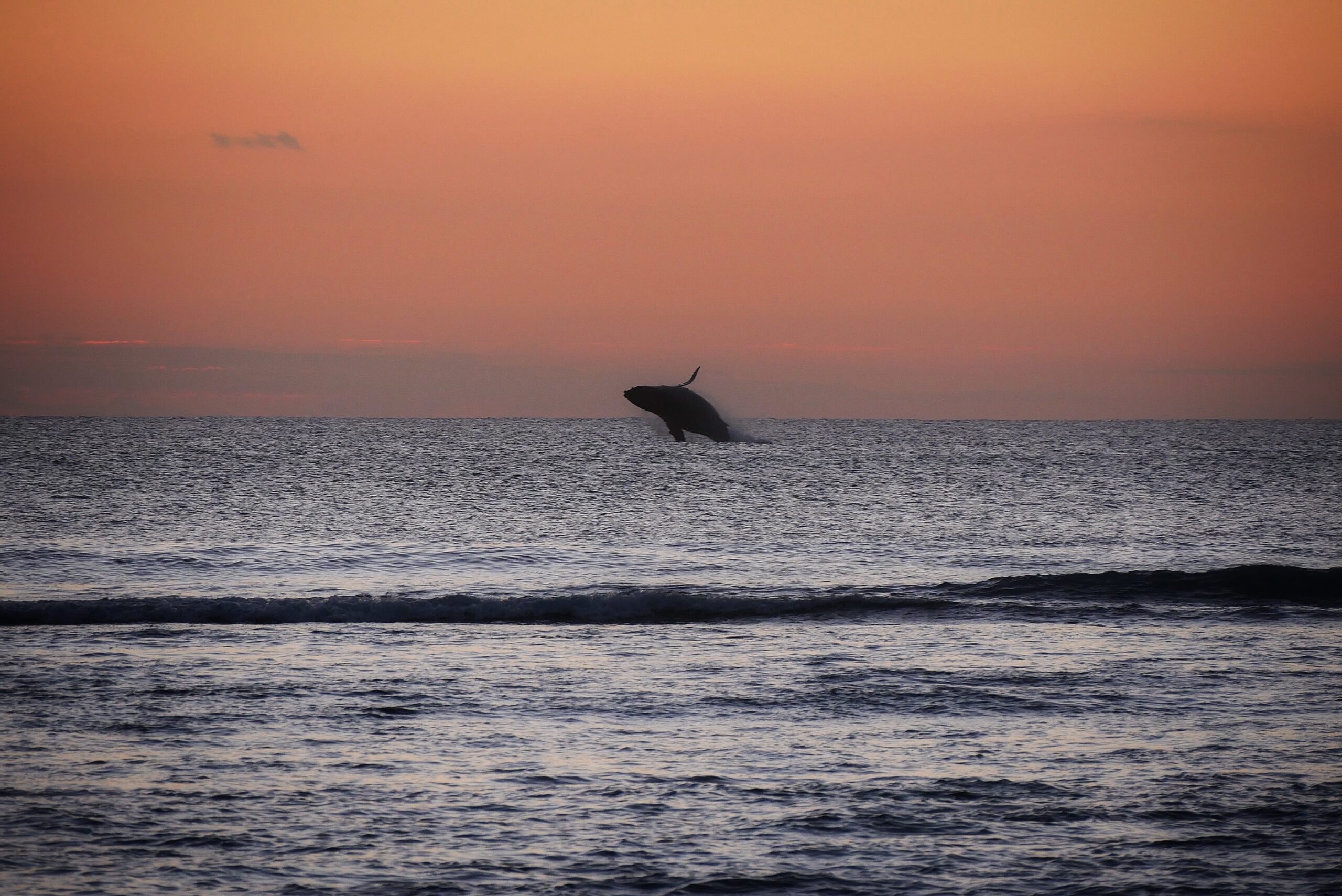
It was early September and from the moment we arrived, Reunion Island set the tone for the trip. Barely out of the airport, as we drove along the ocean, I spotted one leaping, then another, then several more!
Throughout the trip, the whales were there every single day, offering countless breathtaking leaps, particularly in the late afternoon from the beach. A spectacle that made every sunset even more magical but far less silent — impossible not to cry out at every jump 😉!
But the most powerful moment was the late afternoon boat excursion departing from Saint-Gilles-les-Bains with Cetasea, a truly respectful whale watching company. The whales were everywhere around us and the sight of them leaping out of the water was simply breathtaking.
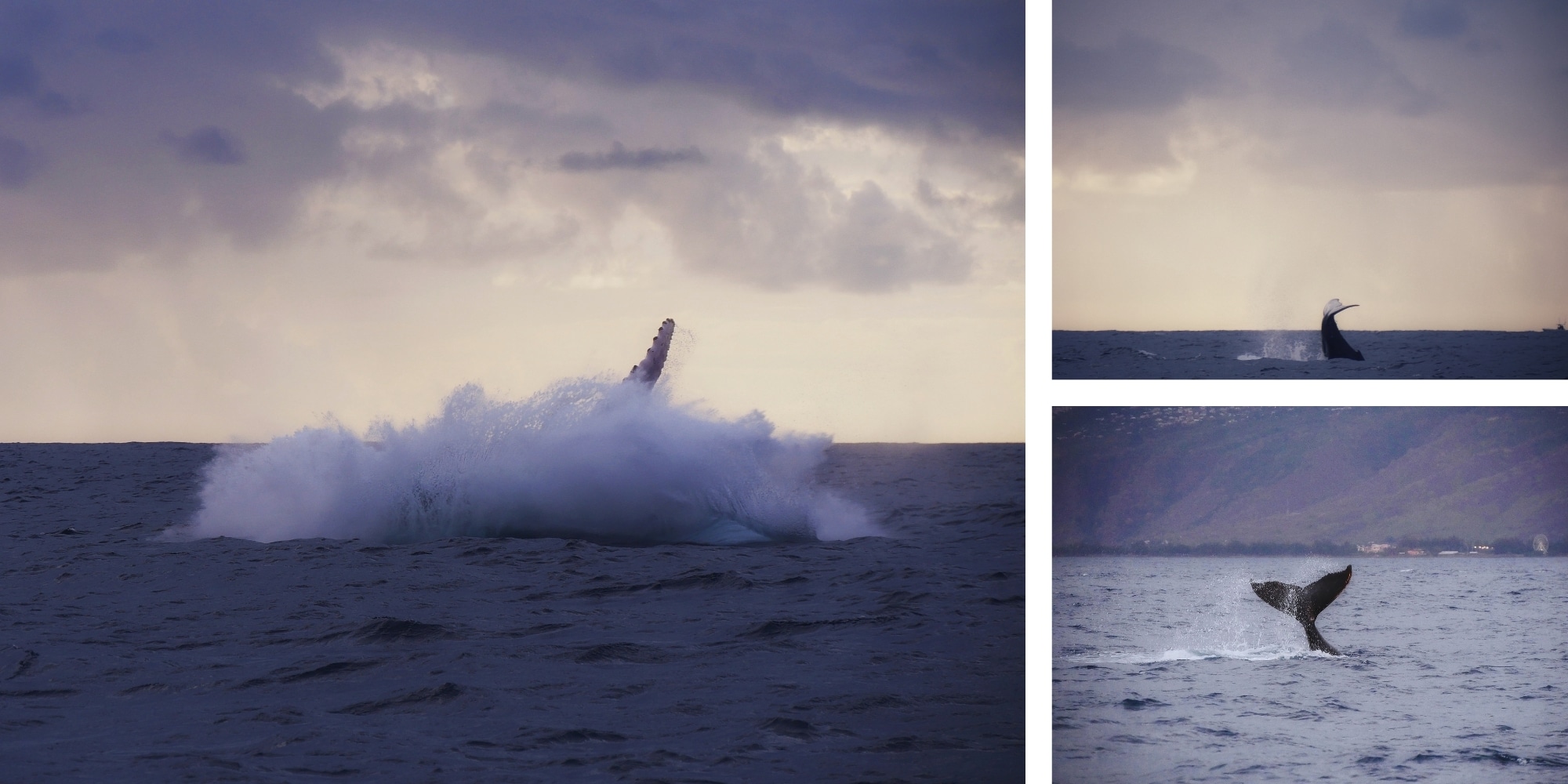
And then we experienced one of those moments you never forget — one of them leaped very close to our boat, before heading towards us and passing right underneath. It was impressive and a little dizzying — compared to her, our small boat felt incredibly tiny 😉! A truly extraordinary moment and once again, I couldn’t hold back tears of joy. Reunion Island is an island that had another surprise in store for me — I also had the incredible chance to encounter chameleons there!
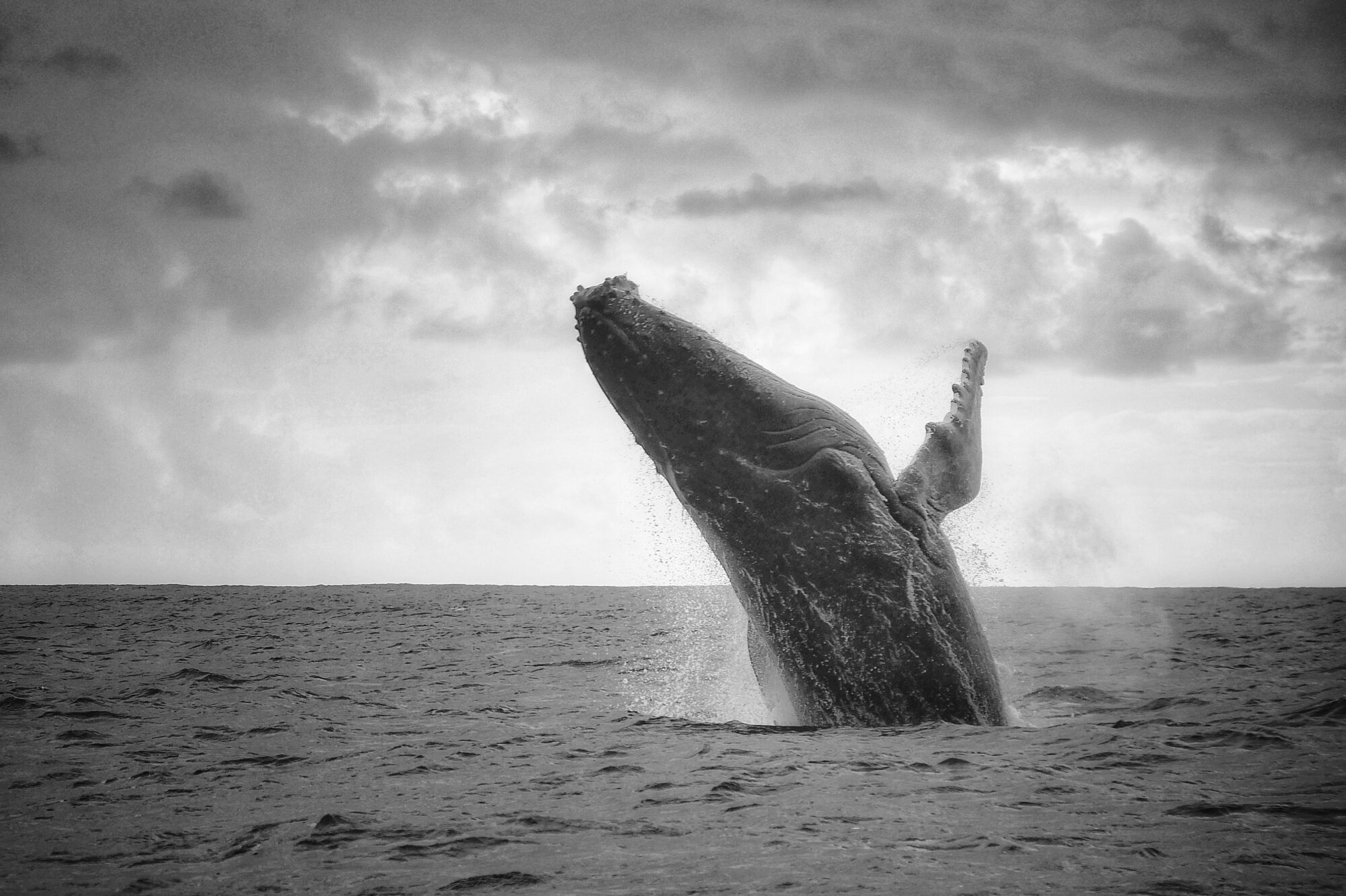
While humpback whales were almost absent from the waters of Reunion Island just a few decades ago, they have returned in numbers since the end of industrial whaling. And the year I had the chance to observe them (2023) turned out to be absolutely historic! The association Globice Réunion, which counts individuals every year, photo-identified no fewer than 1,271 humpback whales in Reunion Island’s waters that season — three times more than the previous year, which was already considered a record. I was incredibly lucky to be there that year.
Fin Whale
Who am I?
I am the fin whale, the second largest animal on Earth after the blue whale — I can reach 25 metres long and weigh up to 80 tonnes. Slender and fast, I cruise at 35 km/h, which has earned me the nickname “greyhound of the sea”!
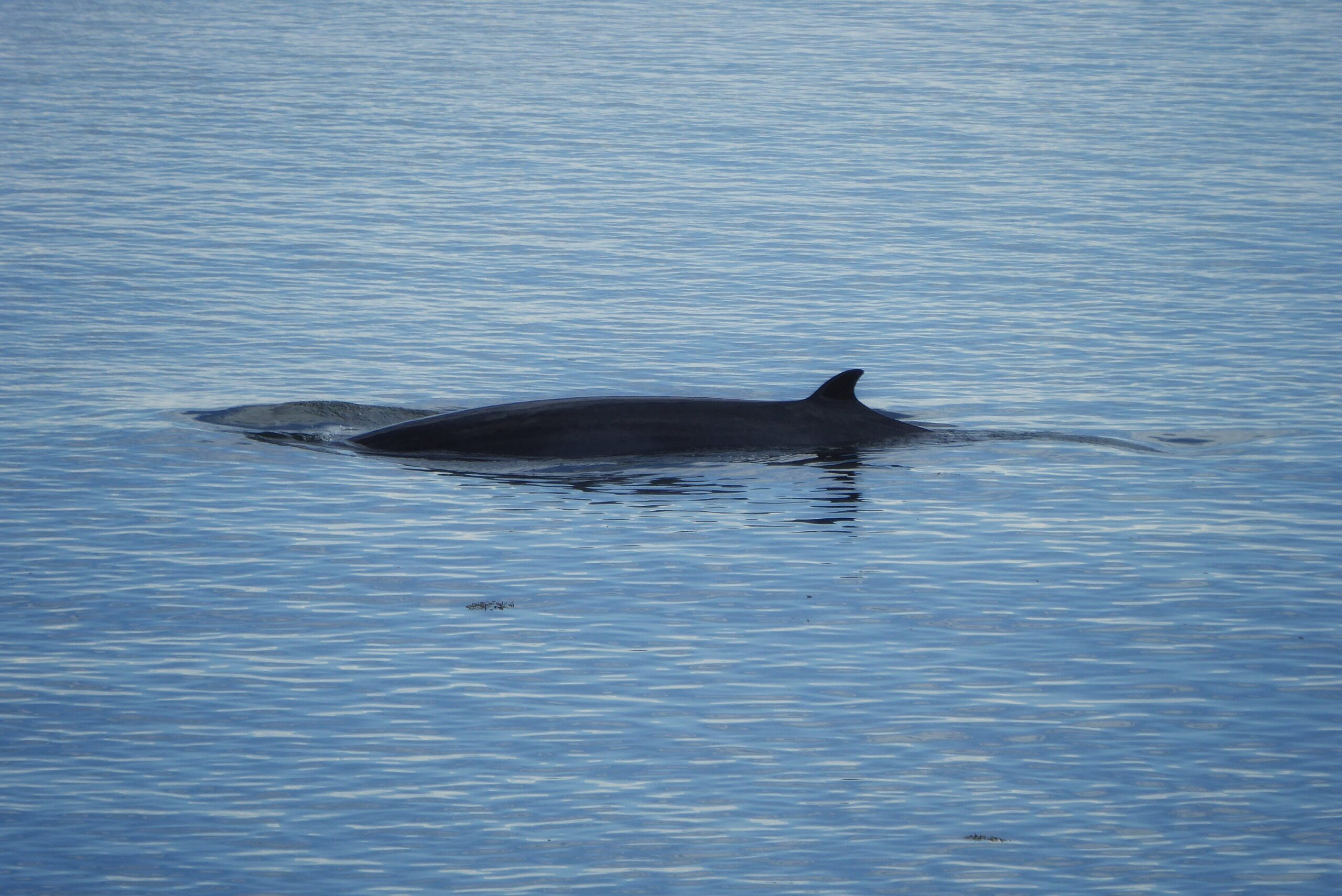
Unlike the humpback whale, I am rather discreet — no spectacular leaps from me! But I remain fascinating for my speed, my imposing size and my ability to stay submerged for a long time. I feed mainly on krill and small fish, which I filter through my baleen plates, and I travel great distances to follow schools of food and nutrient-rich currents. I therefore travel often, and my presence in different locations depending on the season offers unique opportunities for unforgettable encounters with me 😊.
Where to find me?
I can be found in many oceans — the North Atlantic, the Pacific and the Indian Ocean. I am a cosmopolitan species that adapts equally well to cold and temperate waters. The Quebec St. Lawrence River is one of the best places in the world to observe me, from June to October. The cold, deep waters of the estuary, rich in krill and small fish, attract me in large numbers every summer.
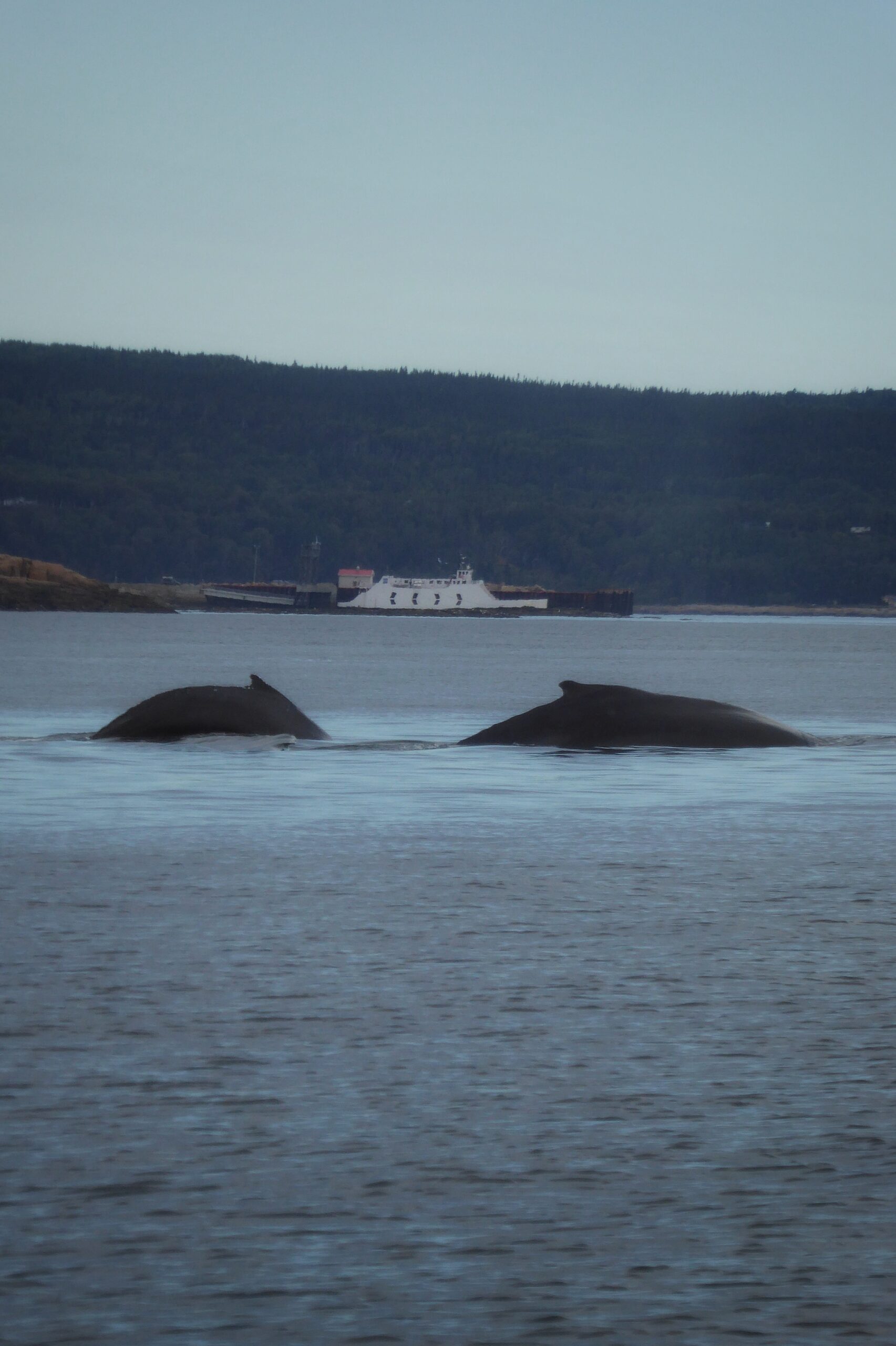
From the shore, several spots allow you to spot me without even getting on a boat:
- Pointe-Noire in Baie-Sainte-Catherine and Pointe-de-l’Islet in Tadoussac, two unmissable spots at the mouth of the Saguenay fjord.
- Cap-de-Bon-Desir in Bergeronnes, an interpretation centre with a direct view of the river.
- Les Escoumins, the Marine Environment Discovery Centre offering a breathtaking view.
By boat, excursions departing from Tadoussac, Les Bergeronnes and Les Escoumins are world-renowned for the quality of their whale watching. You can also spot me elsewhere in the world, notably in Iceland, Norway or the Azores — destinations renowned for the quality of their cetacean observations. Wherever you are, always choose responsible operators who respect my space.
As with any activity, choosing the right whale watching company is crucial — it can make all the difference between an unforgettable experience and a disappointment. A small zodiac with fewer than 10 people and a passionate, respectful guide is incomparable to a large crowded boat. This often costs more, but it is truly worth it when possible! And if you can, move away from the very touristy areas like Tadoussac and head further north, to Les Escoumins for example, to watch whales in a calmer setting.
Quebec, whales from the shore to the open sea
It was during a road trip along the St. Lawrence River in mid-September that I had my very first real encounter with fin whales. I first had the chance to observe them from the shore, at the Pointe-Noire Observation Centre, in Tadoussac and at Cap-de-Bon-Désir. It was incredible to be able to see whales with my feet on solid ground, to watch their blows rising above the water. A magnificent spectacle at any time of day and particularly in the evening. For the St. Lawrence is exceptionally rich in wildlife and watching all this world pass by at sunset is simply magical!
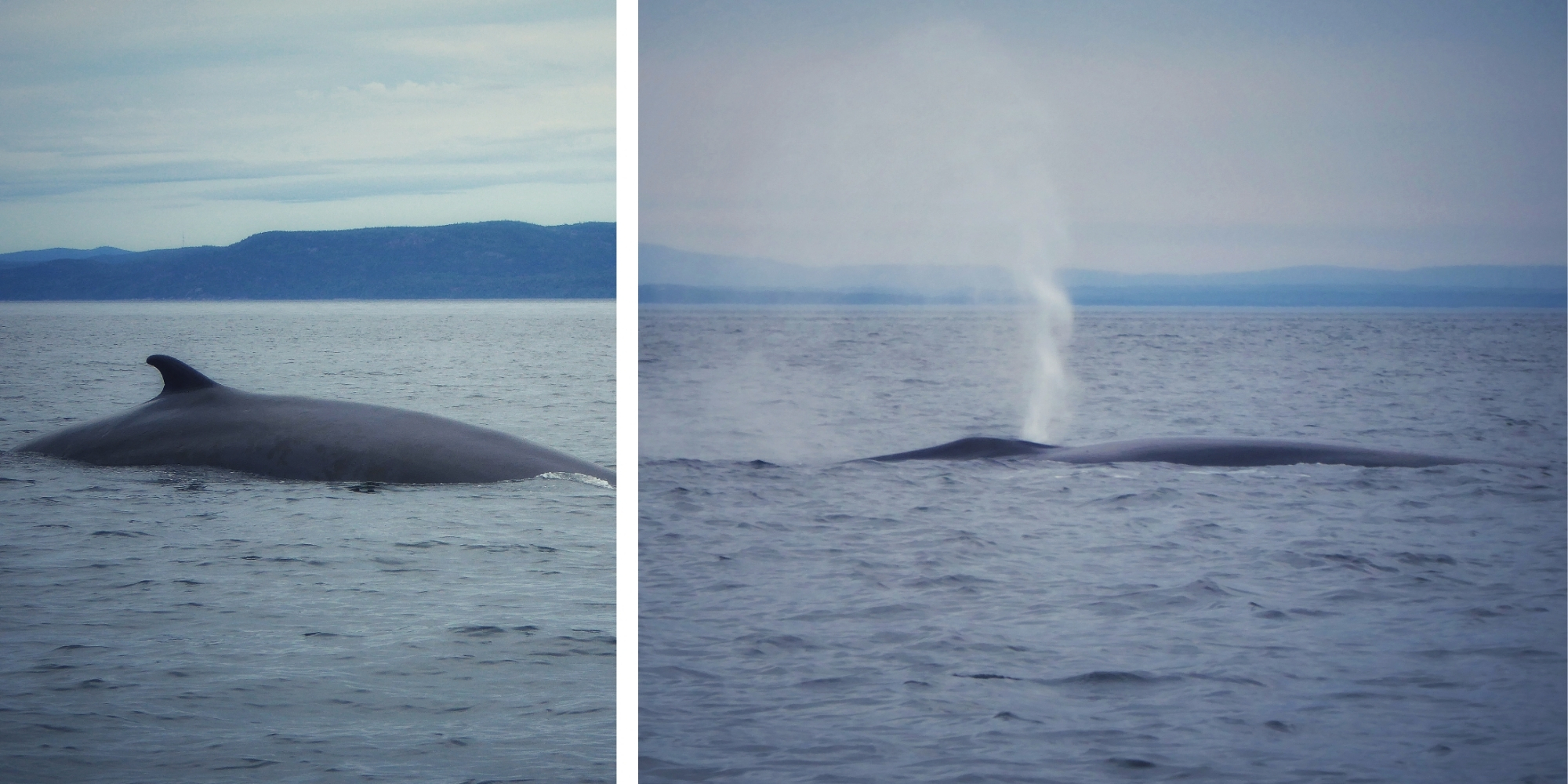
But the most powerful moment remains the zodiac excursion departing from Les Escoumins. There, I experienced a moment of intense emotions — fin whales all around us, watching them dive and resurface… It was my very first real encounter with whales from a boat and I will never forget it.
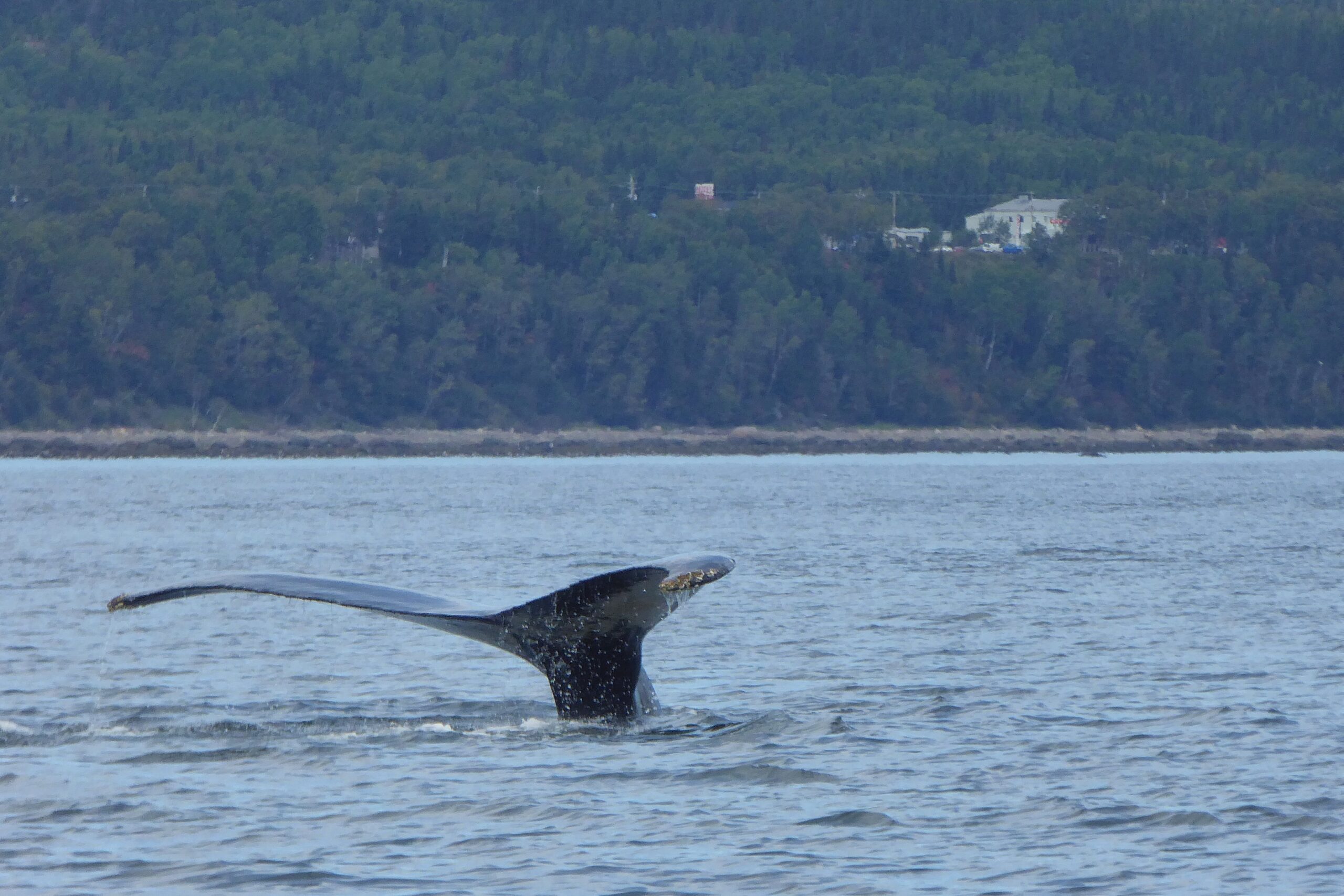
I returned twice, in July and in October, theoretically the beginning and end of the season. And even though I spotted a few, it was nothing compared to that first experience. September is clearly the month when activity is at its most intense — something the guides confirmed to me.
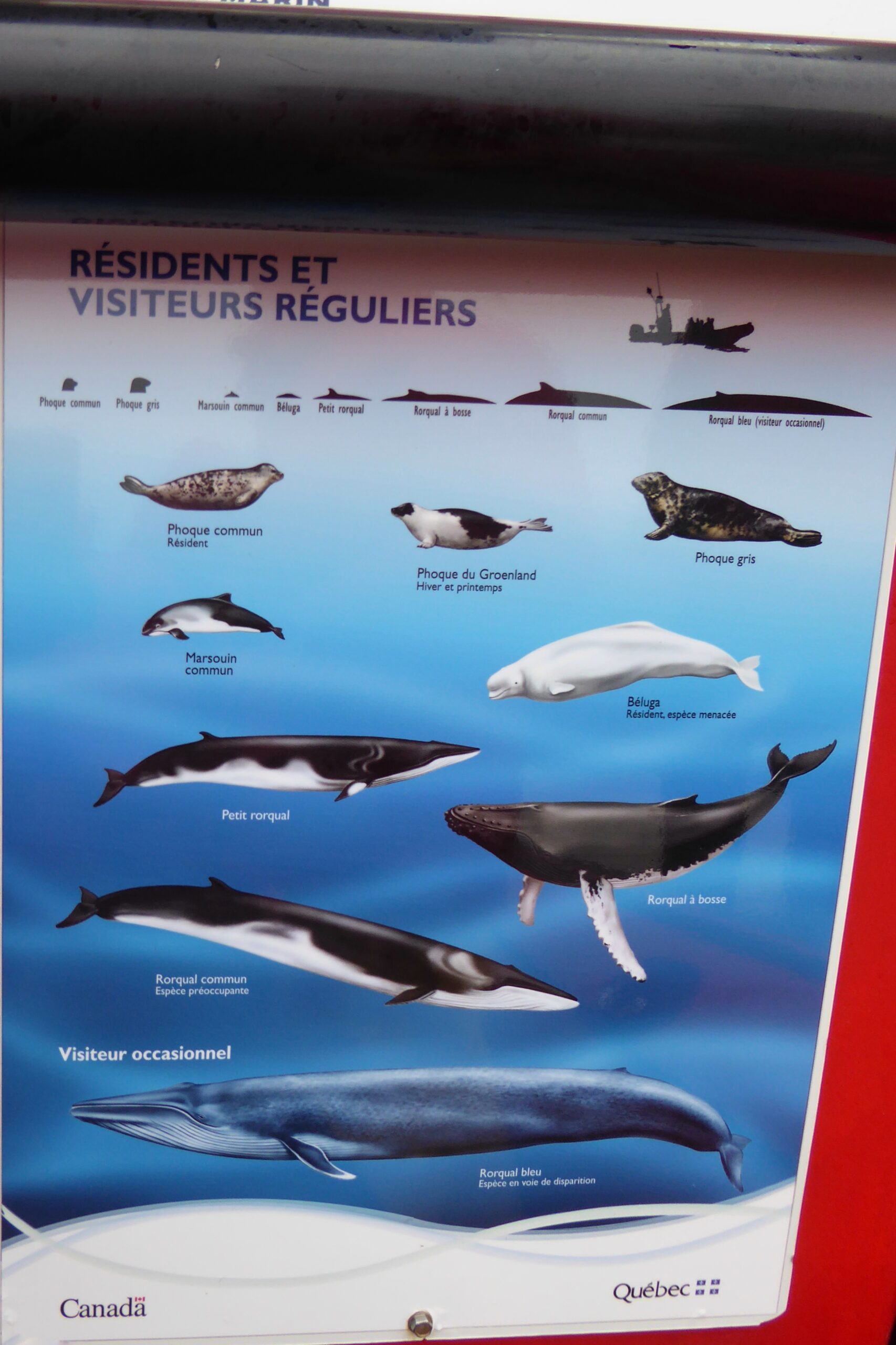
The St. Lawrence estuary is a true paradise for marine wildlife lovers. Beyond fin whales, many other species can be observed there — some very present and easily spotted such as seals, porpoises and belugas. Others require a little more luck, such as the majestic blue whale.
Did you enjoy this article? Find my photos as instant downloads on my Etsy shop, perfect as wallpapers or wall decoration. Visit the NaturElfes shop →
Join the NaturElfes community and receive 5 exclusive free nature wallpapers!