On the Trail of Musk Oxen in Norway
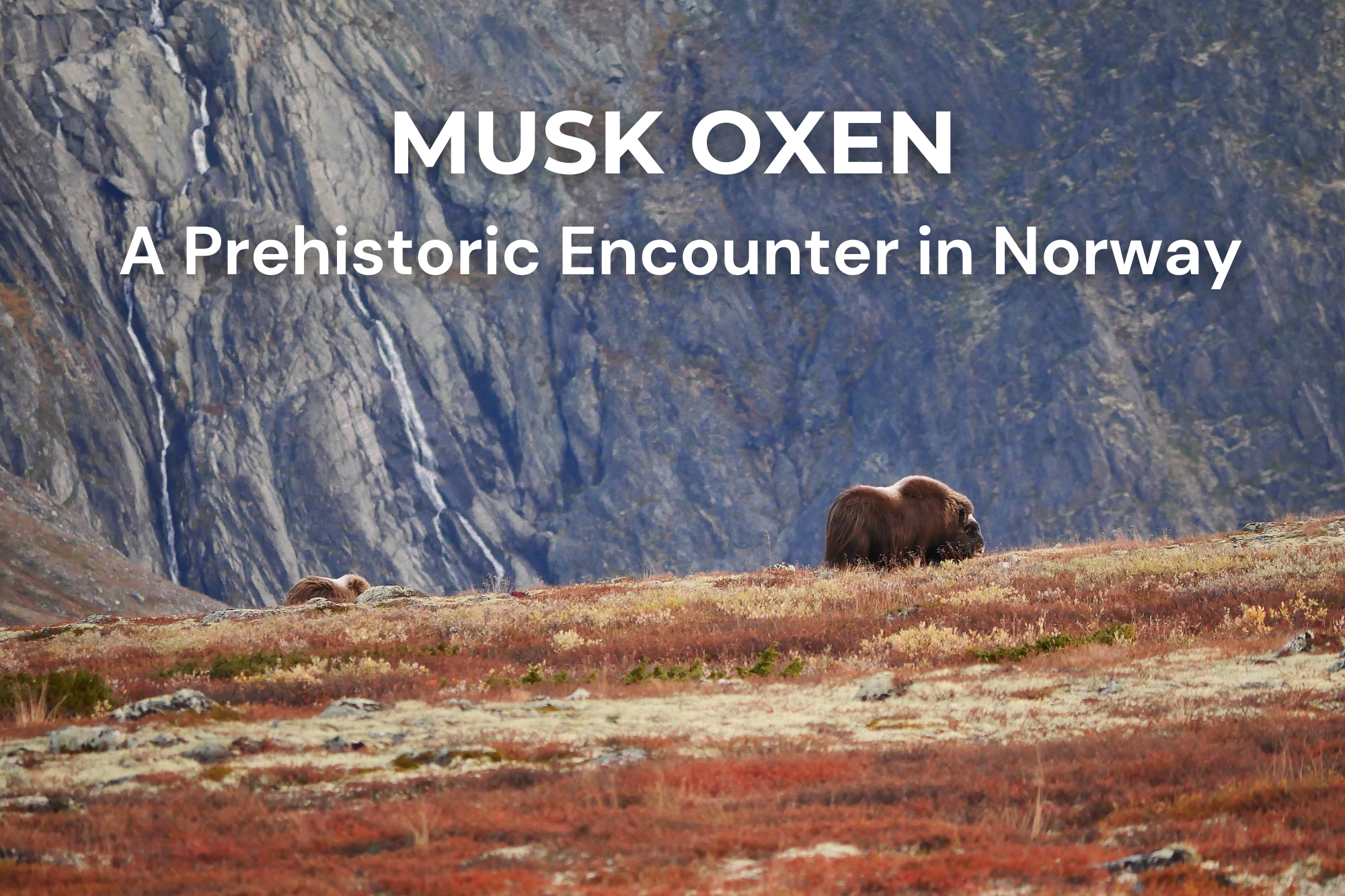
During my last trip to Norway (see post), I had hesitated to go see the musk oxen, but the long drive had put me off… Still drawn to these magnificent prehistoric “moo-moos,” I took advantage of the magical colors of the Norwegian tundra in autumn to go in search of them.
Who am I?
I am the musk ox, a true survivor from prehistory. With my thick, woolly coat, I am perfectly adapted to northern climates and capable of withstanding the extreme temperatures of the tundra. I am imposing: I can reach 1.5 meters at the shoulder and weigh up to 400 kg. My massive crescent-shaped horns, present in both males and females, help me defend myself and assert my place within the herd, where I live alongside other individuals. Our herds can range from 10 to 30 members, with composition varying by season. Like humans, my calf develops in my womb for nine months, but it stays by my side for only the first two years of its life 😉. Still, it is fairly independent from as early as two months old, able to find most of its food, which consists mainly of lichens and tundra grasses. To communicate, we use grunts, calls, and powerful breaths, which warn other herd members, signal threats, or maintain group cohesion. Once extinct in Norway, I was reintroduced into Dovrefjell–Sunndalsfjella National Park, but I can also be found in Alaska, Canada, Greenland, and Siberia.
If you’re lucky enough to spot me, keep a safe distance of at least 200 meters, as I can run up to 60 km/h.
Where to find me?
If you want to meet me in Norway, there is only one place where I still live in the wild: Dovrefjell–Sunndalsfjella National Park (along the E6 road, between Oslo and Trondheim).
Good news: I’m here all year round, but despite my size, I’m not that easy to spot.
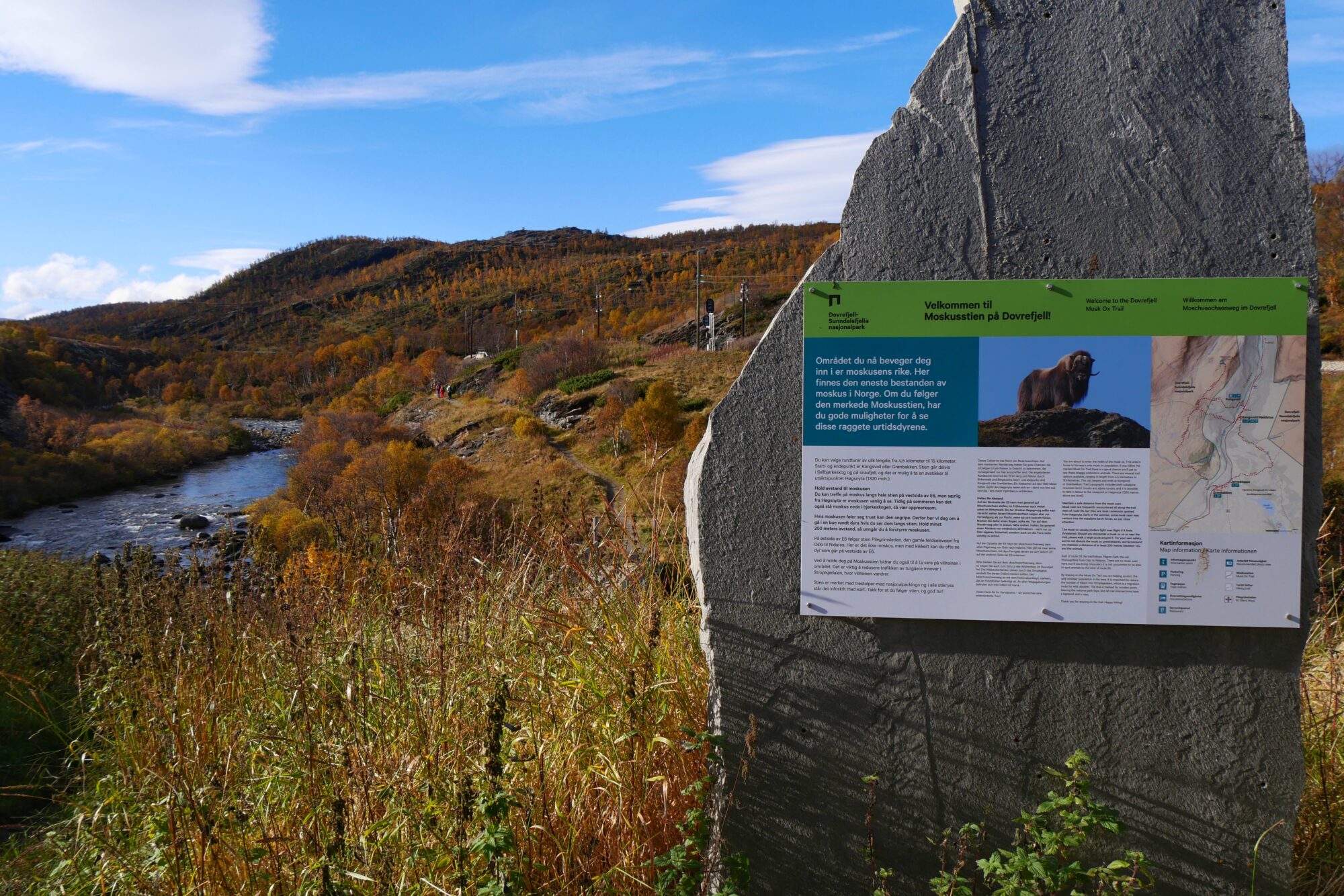
By following the Musk Ox Trail, you’ll have a good chance of catching a glimpse of me. Several hiking trails are available, depending on how much you feel like walking. You can also take a detour to the Høgsnyta viewpoint (1,320 m above sea level), where I’m often seen.
Please note that you can only encounter me on the west side of the E6 highway (the left side on the map).
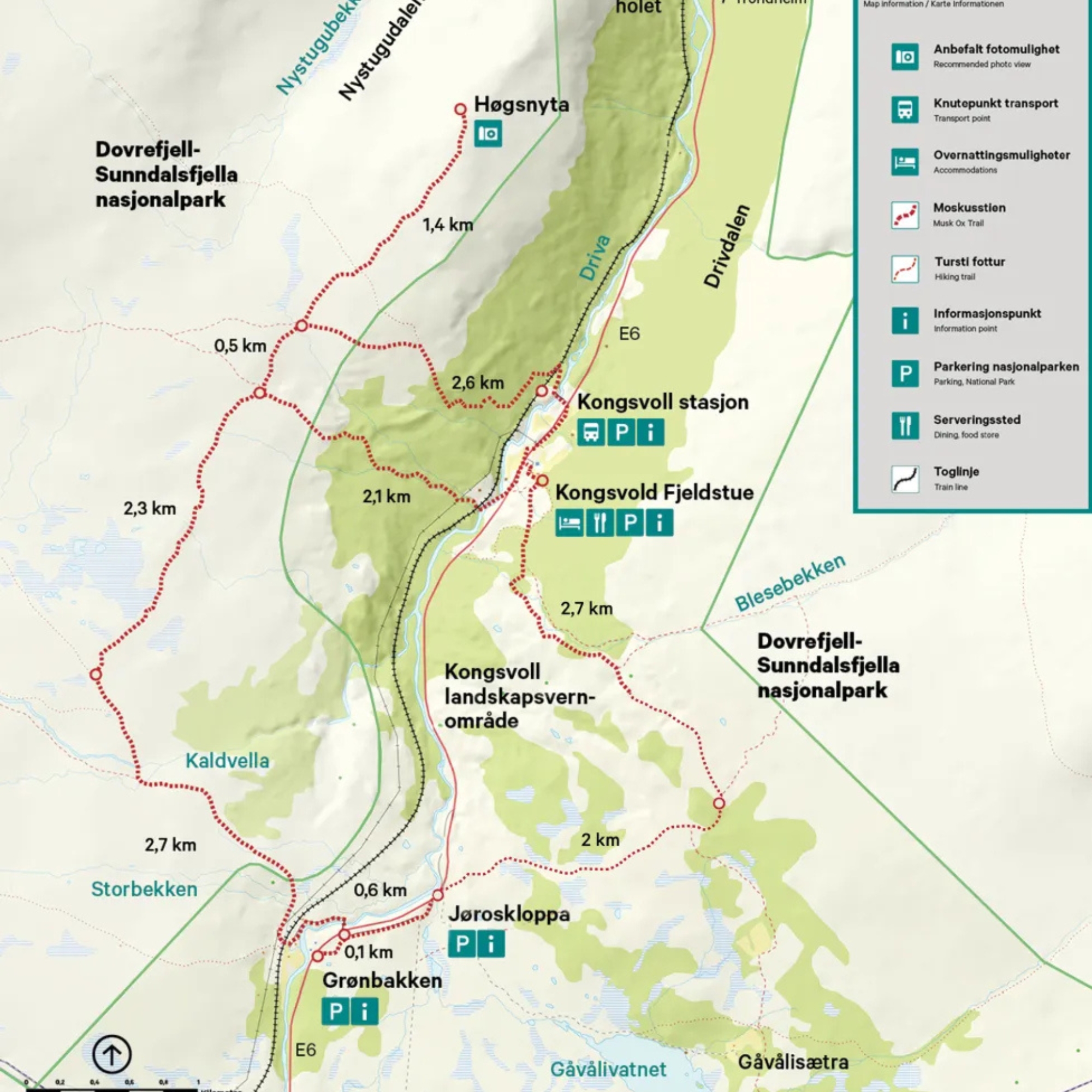
If you like, there are also guided tours with a guide who knows how to spot me. In any case, you’ll need patience, strong legs 😉, and perhaps several attempts to get lucky and see me. Keep in mind that I share this territory with other charming residents: wild reindeer, moose, and arctic foxes… plenty of reasons to come and explore the park!
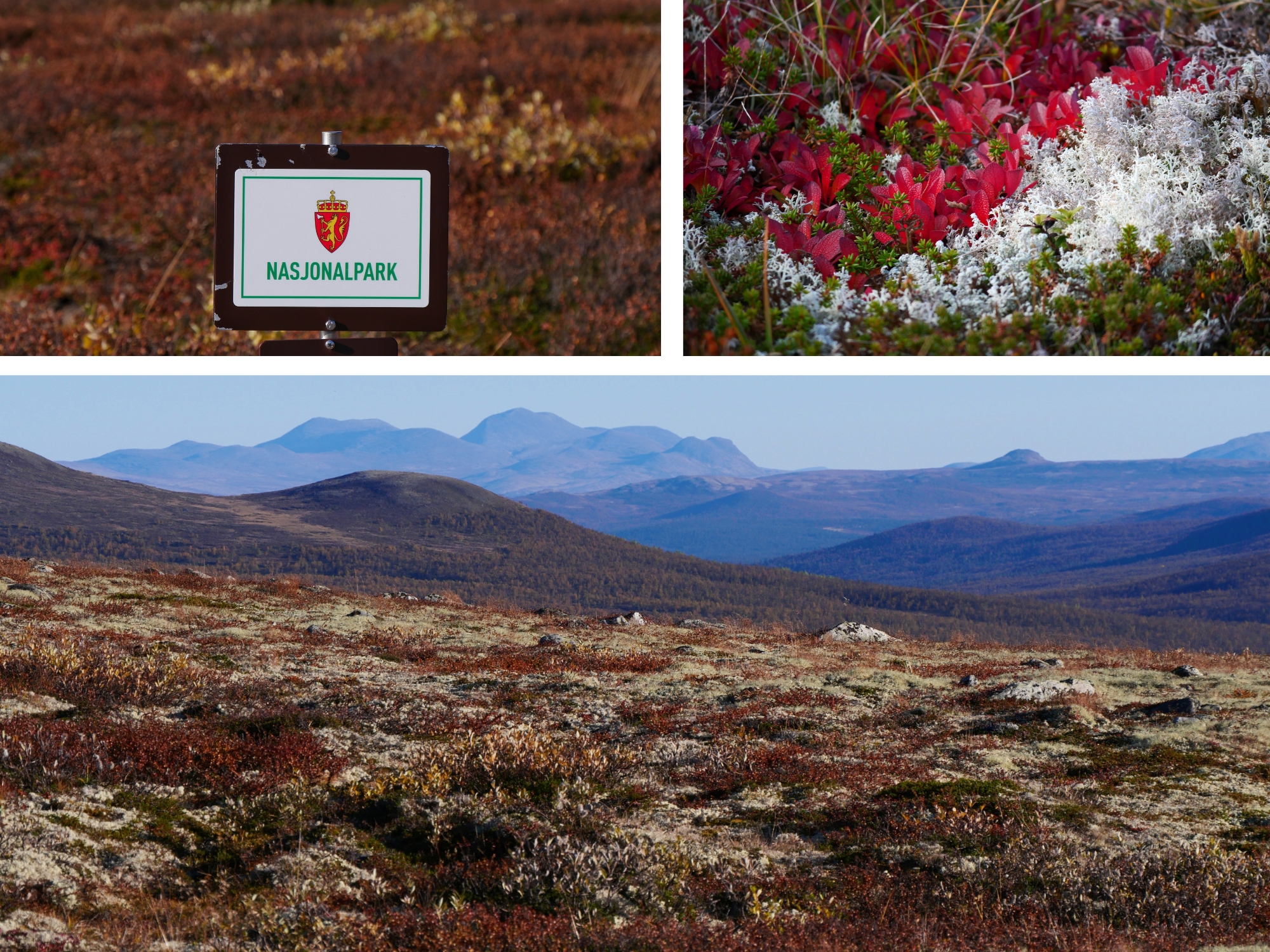
You can access the park by car or by train, with the station located directly on the trail. There are several parking areas along the E6 road, but only one is free: the one at the botanical garden, just past the Kongsvold Fjeldstue Hotel.

On the Trail of a Prehistoric Animal
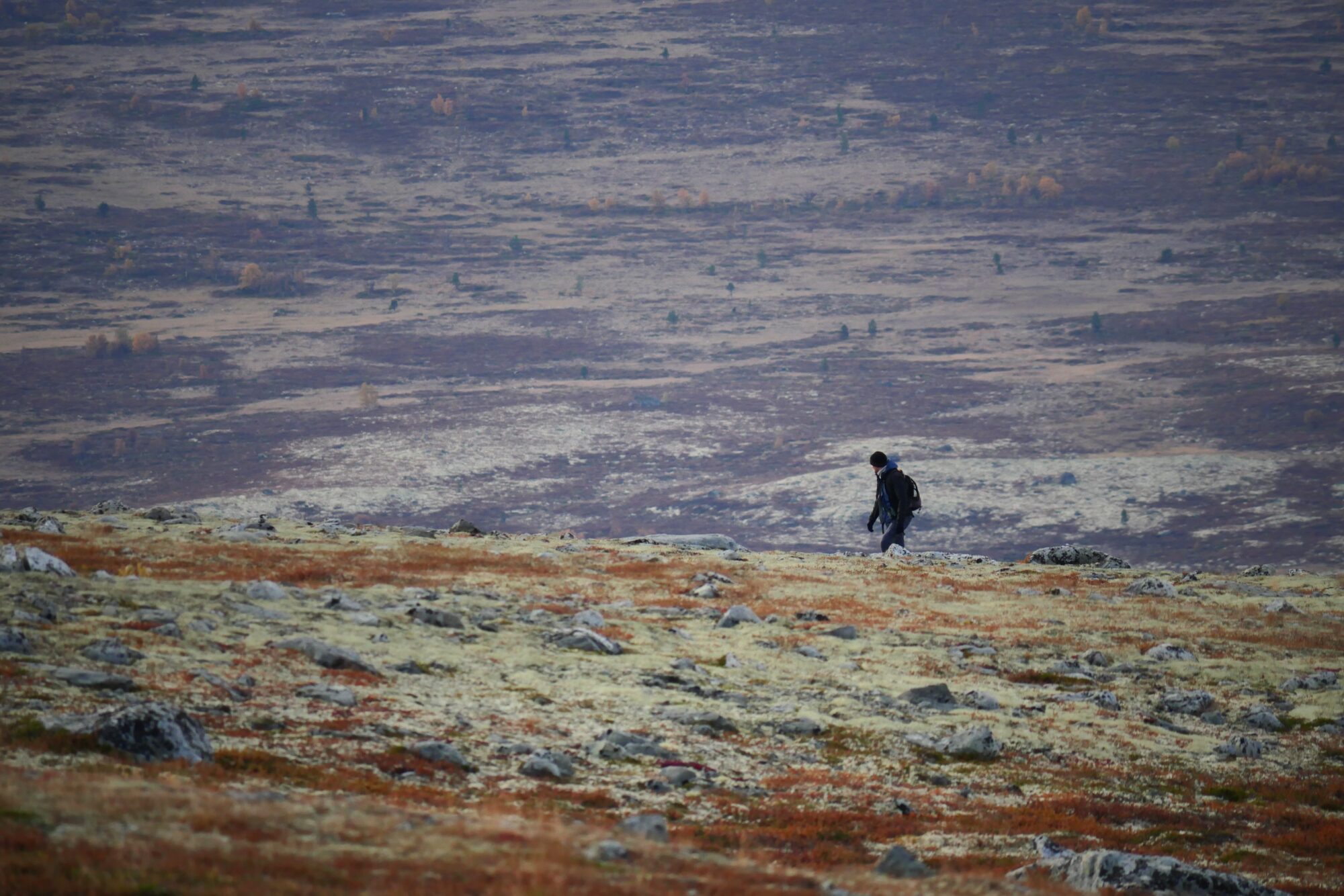
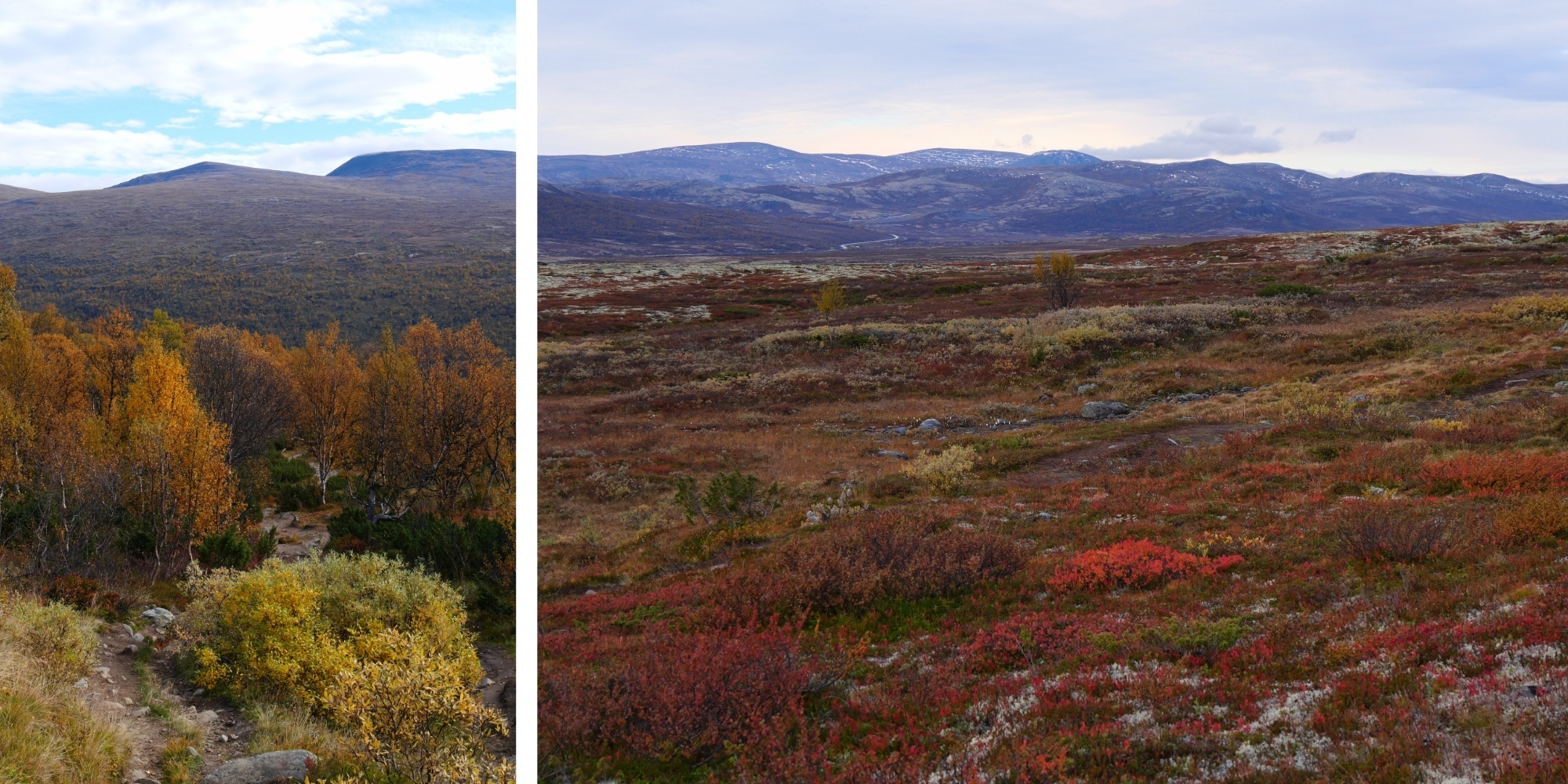
The day after our arrival, we decided to head out in the late afternoon into Dovrefjell National Park. We chose to do the short 5.2 km loop, starting from the Kongsvold Fjeldstue Hotel and returning via the station. The first two kilometers steadily climb through a birch forest before opening up onto the barren plateau, a stunning tundra painted with the colors of autumn.
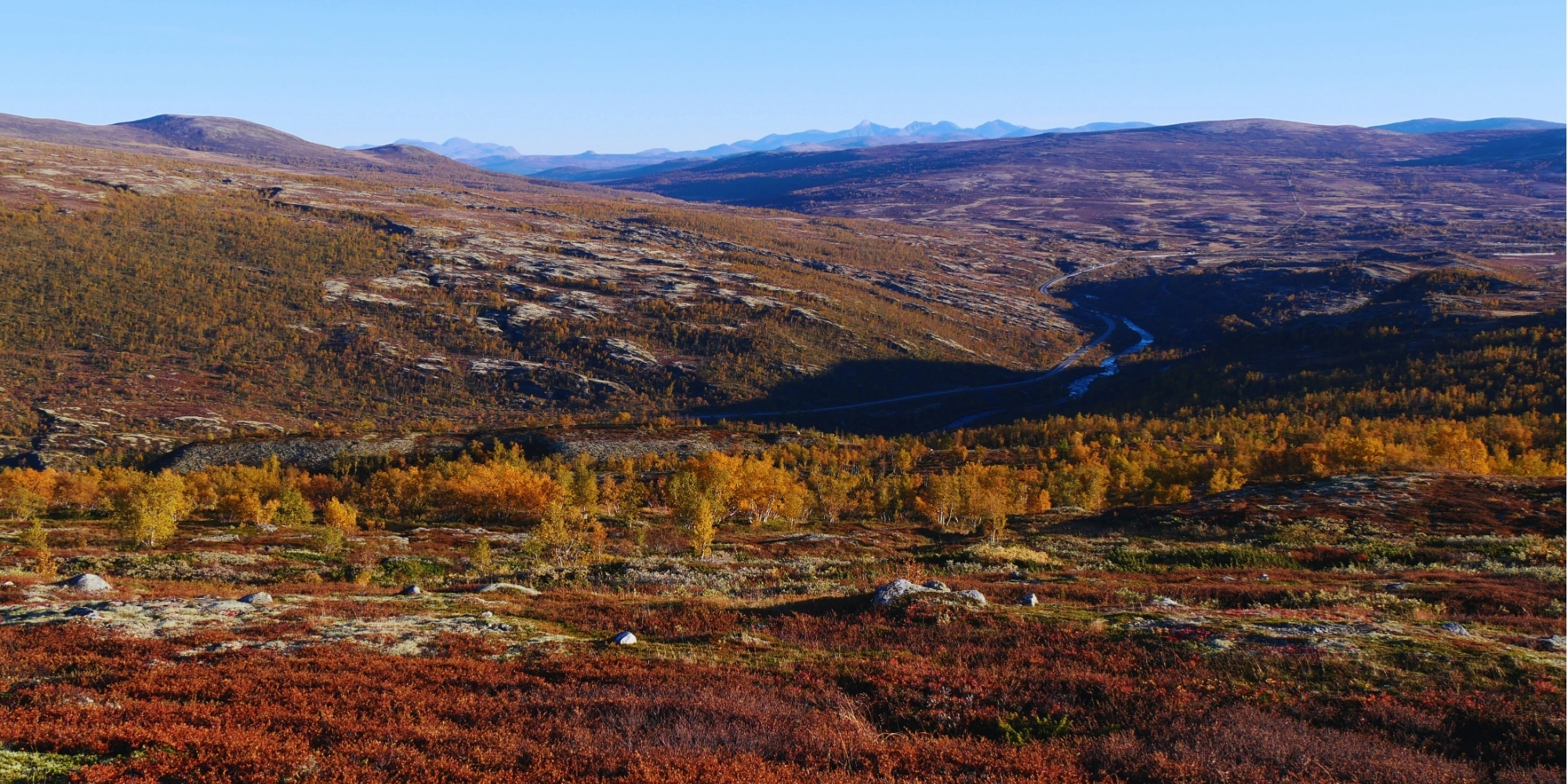
This is where we began our search for these magnificent giants. The hardest part was choosing which path to take, but we decided to continue the loop.
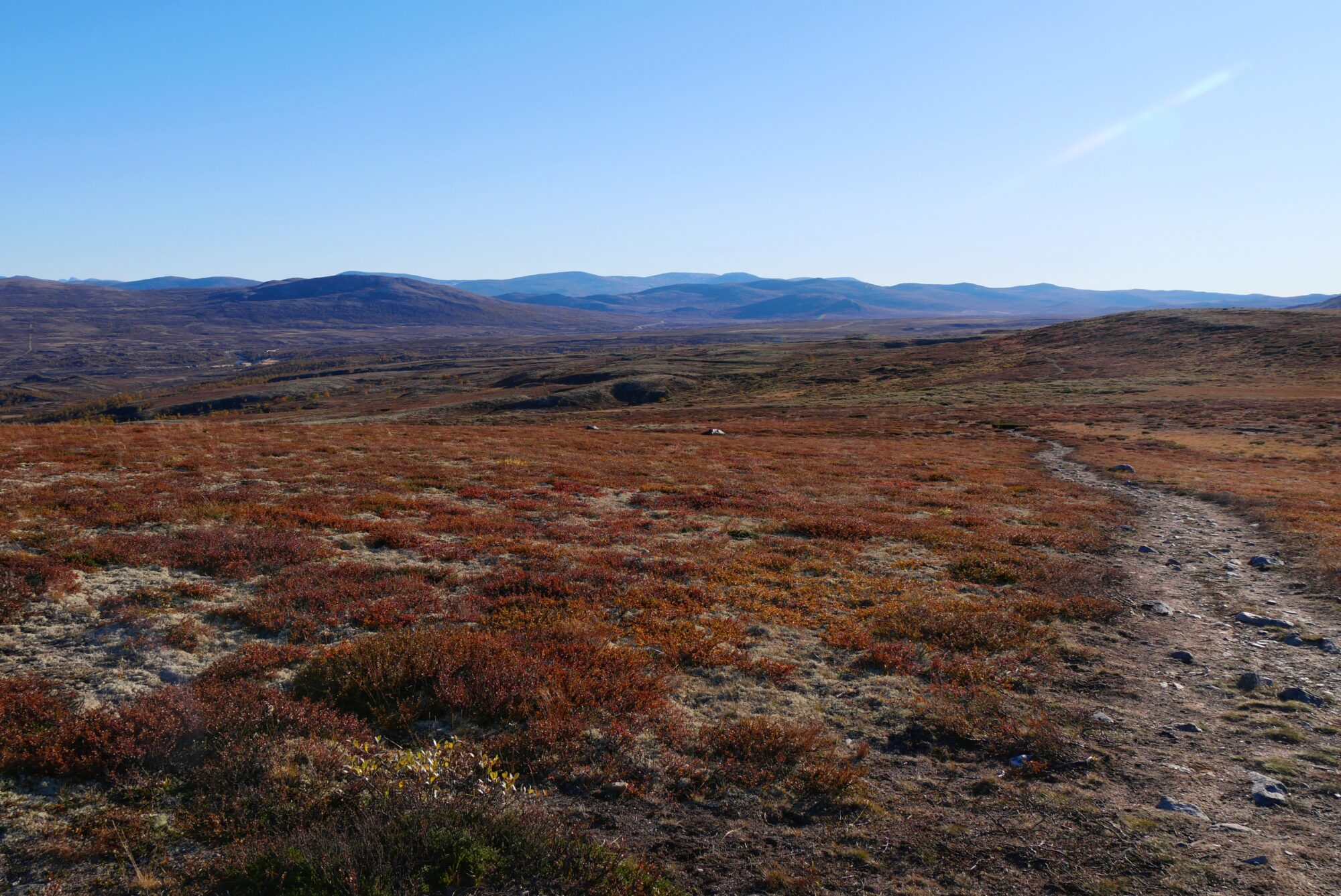
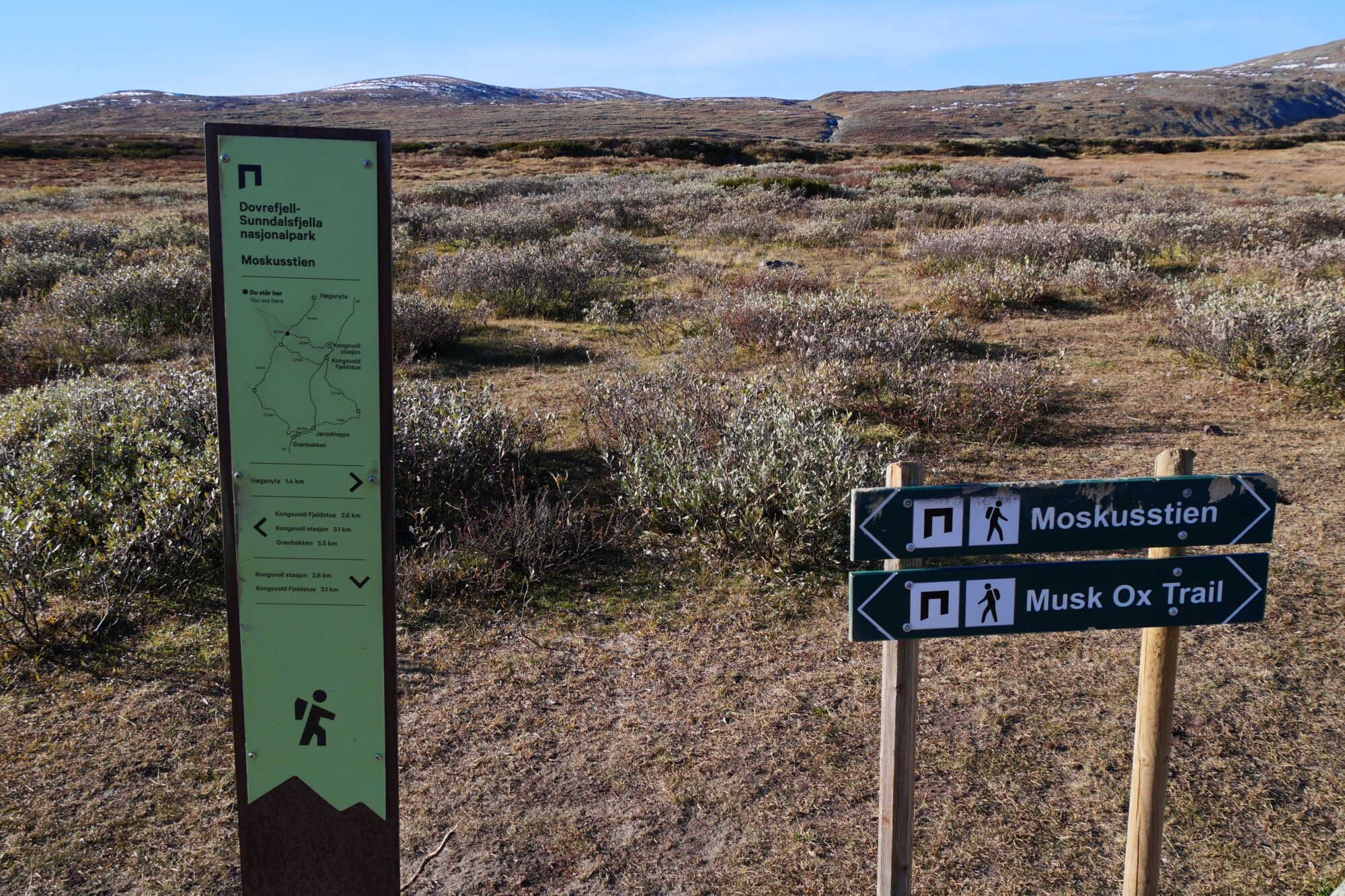
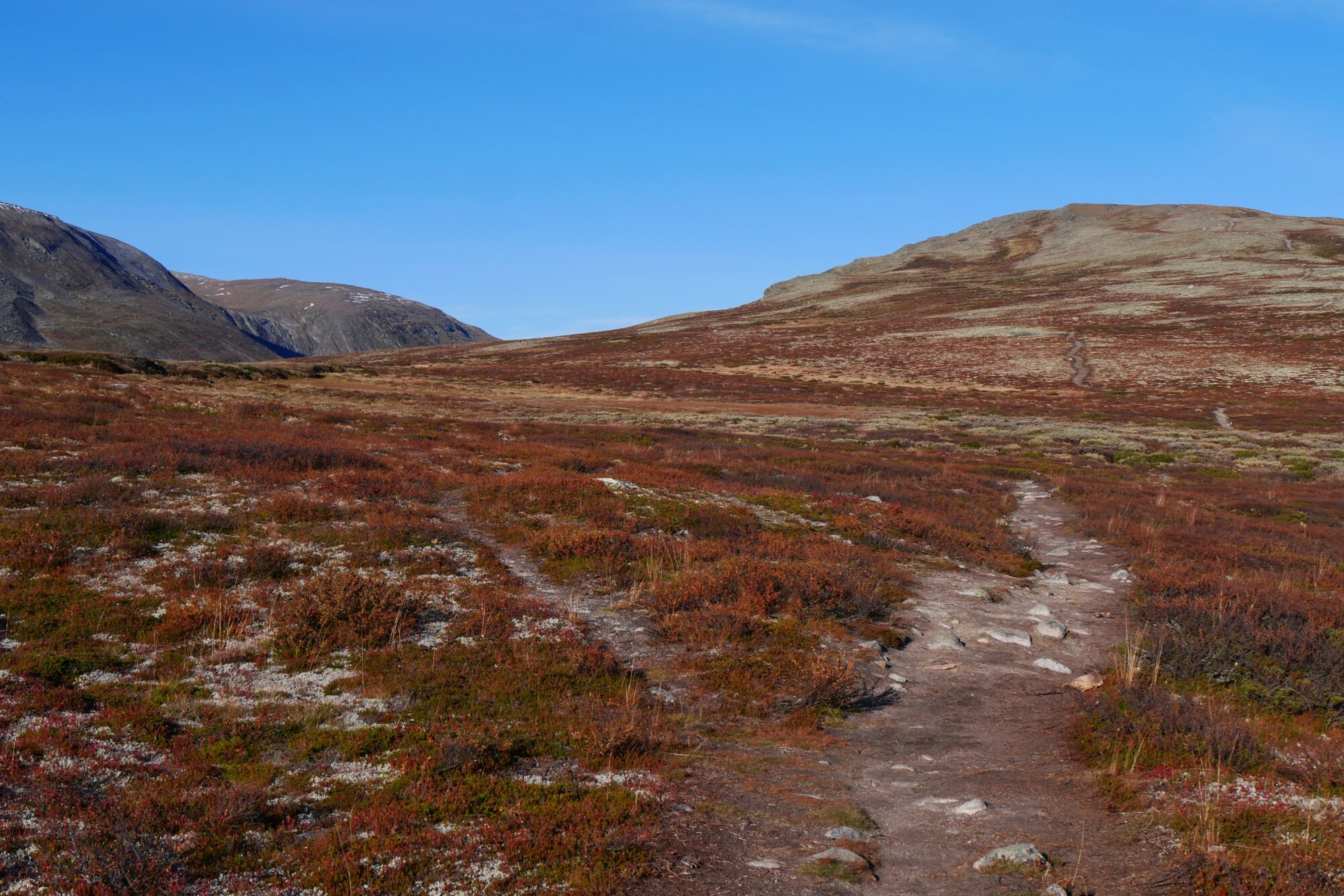
We scanned every corner with our binoculars, watched people in the distance to see if they spotted anything, and noticed many signs of their presence—droppings, tracks… but no oxen in sight.
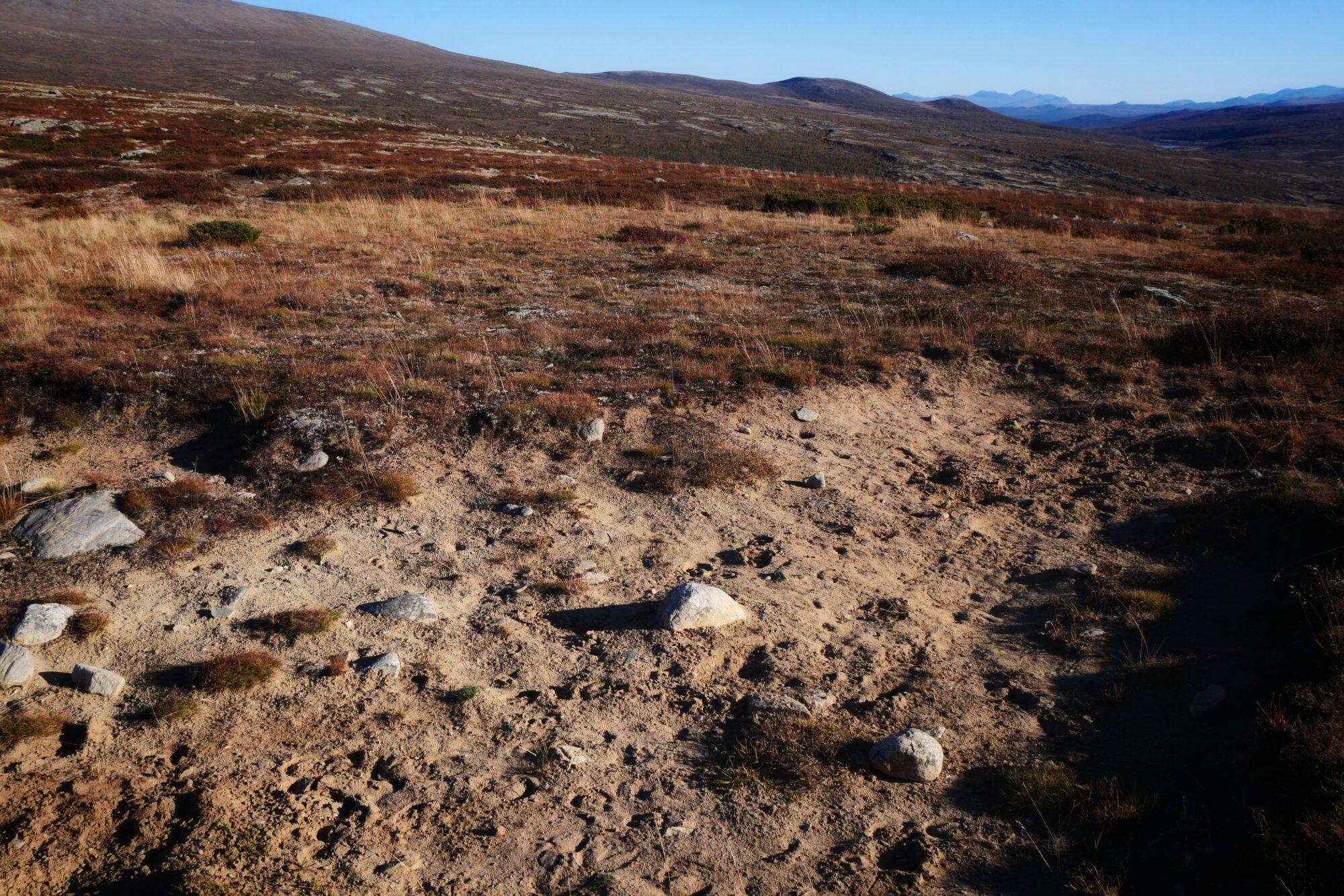
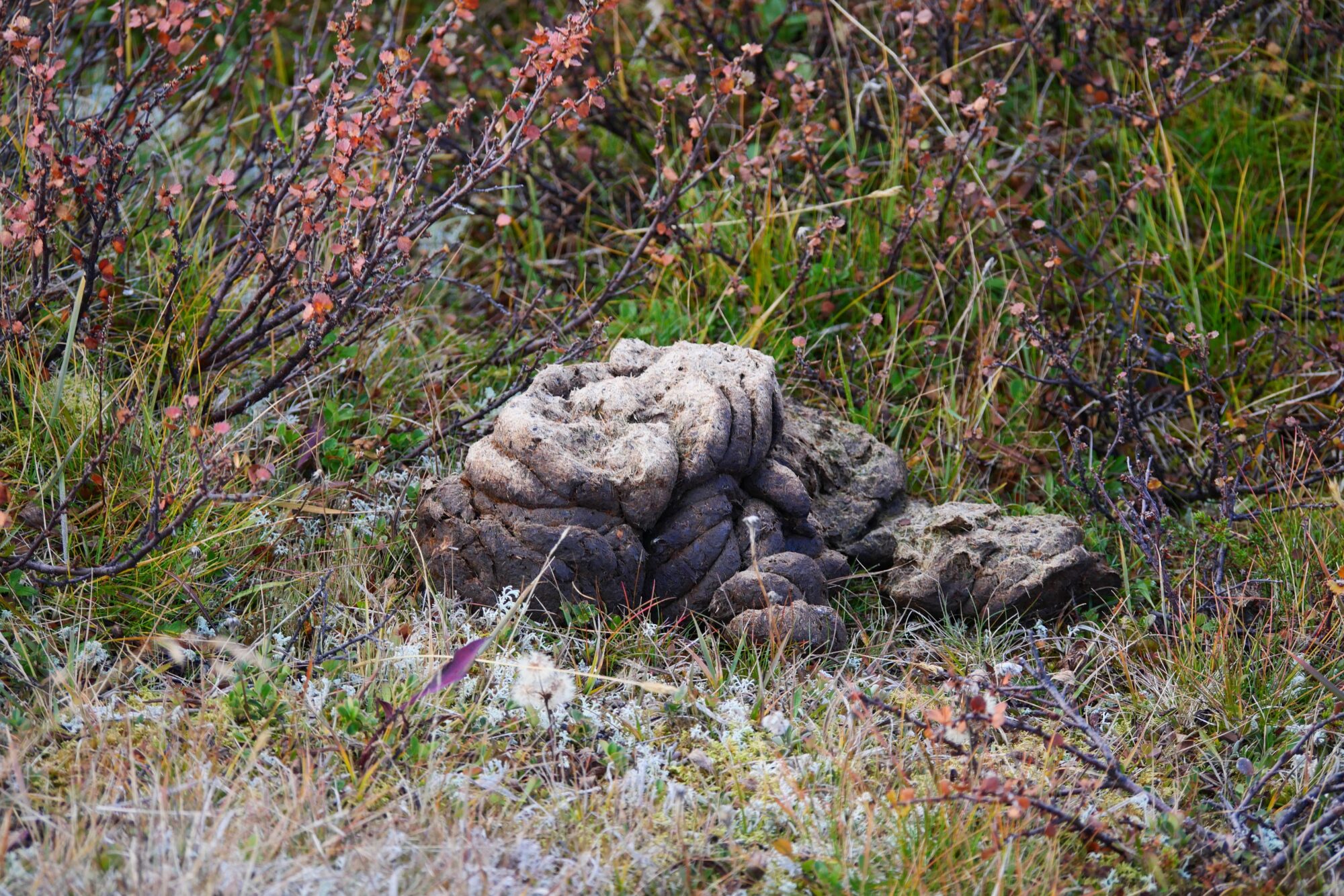
We started to climb up to the Høgsnyta viewpoint, but eventually turned back, exhausted from our long morning hike. The descent along the other trail back to the station was tough—the path is narrow and rugged. Along the way, we met a lovely couple from Quebec, who had started at the same time but on a different route. They hadn’t seen any musk oxen either. This first attempt mainly helped us get familiar with the terrain and plan our second expedition, with a bit more strategy 😉.
A little aside: the park is absolutely stunning, especially with the autumn colors. It’s wild, vast, and really makes you want to come and do a trek! We even came across several people camping in the area.
The Magic Moment
Two days later, we were back, this time just after sunrise. We decided to go up and come down the same trail (the one right across from the hotel) to save our energy for exploring the plateau! Once again, the ascent took us through birch trees and the fiery colors of autumn.
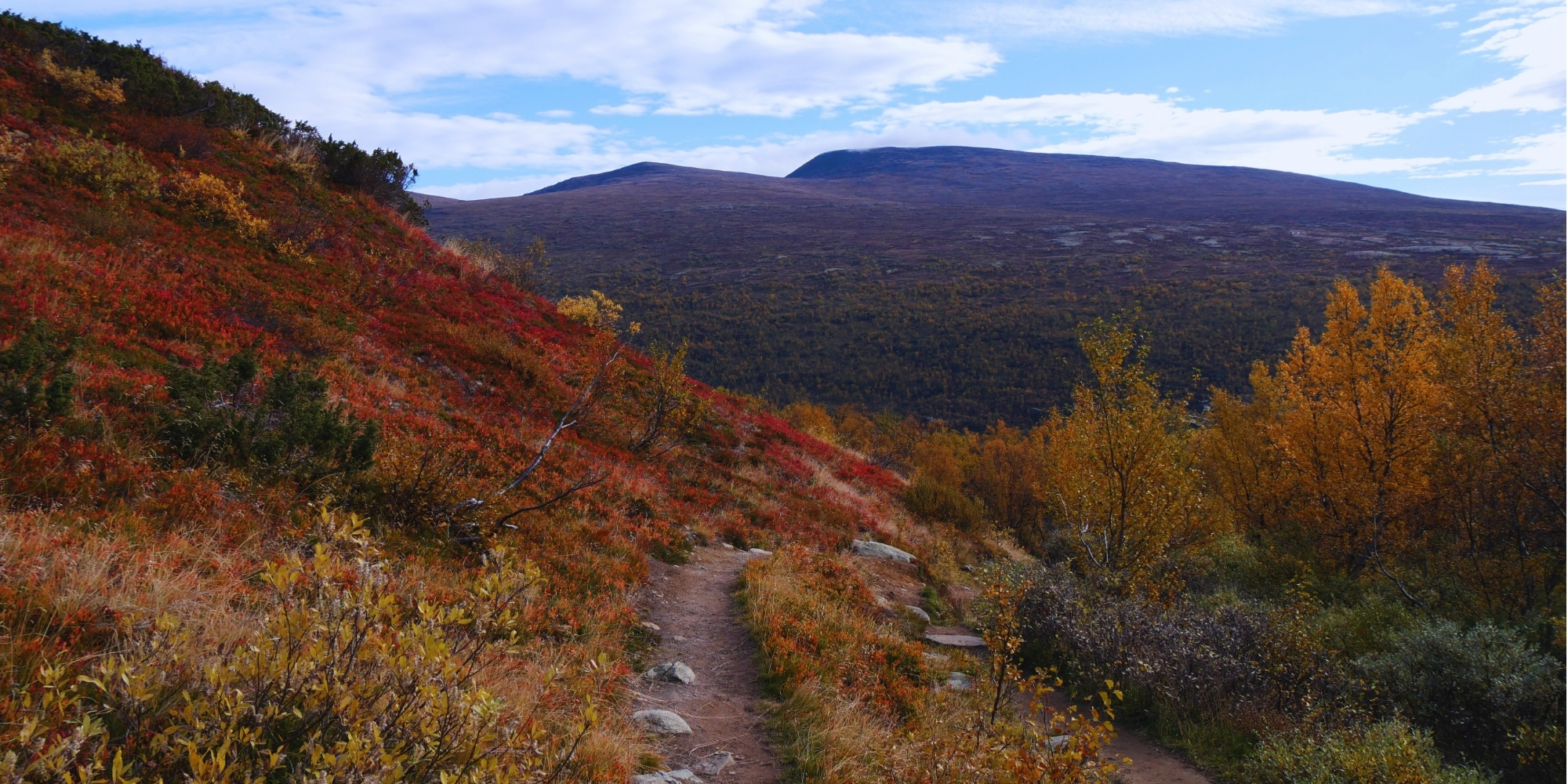
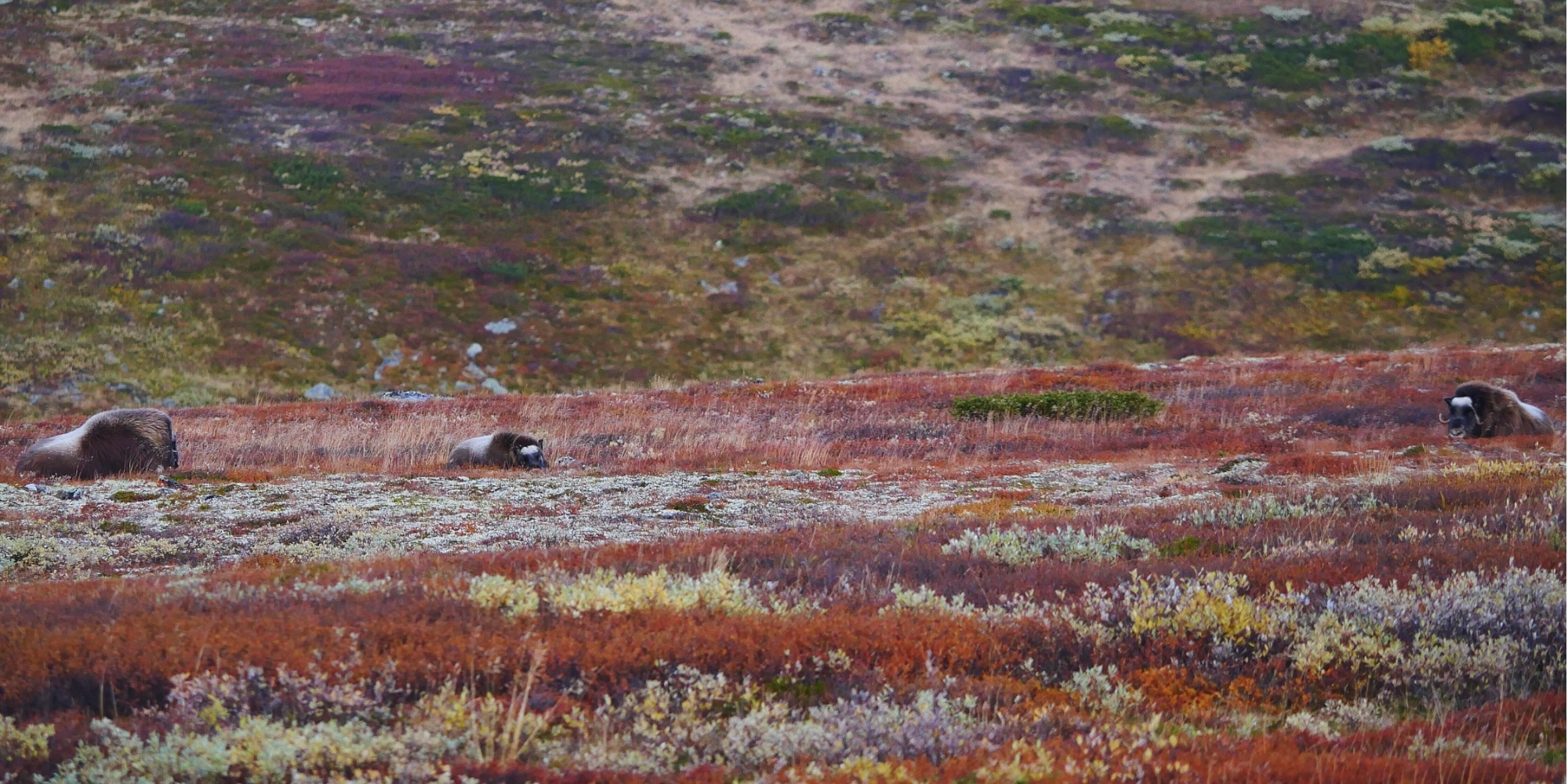
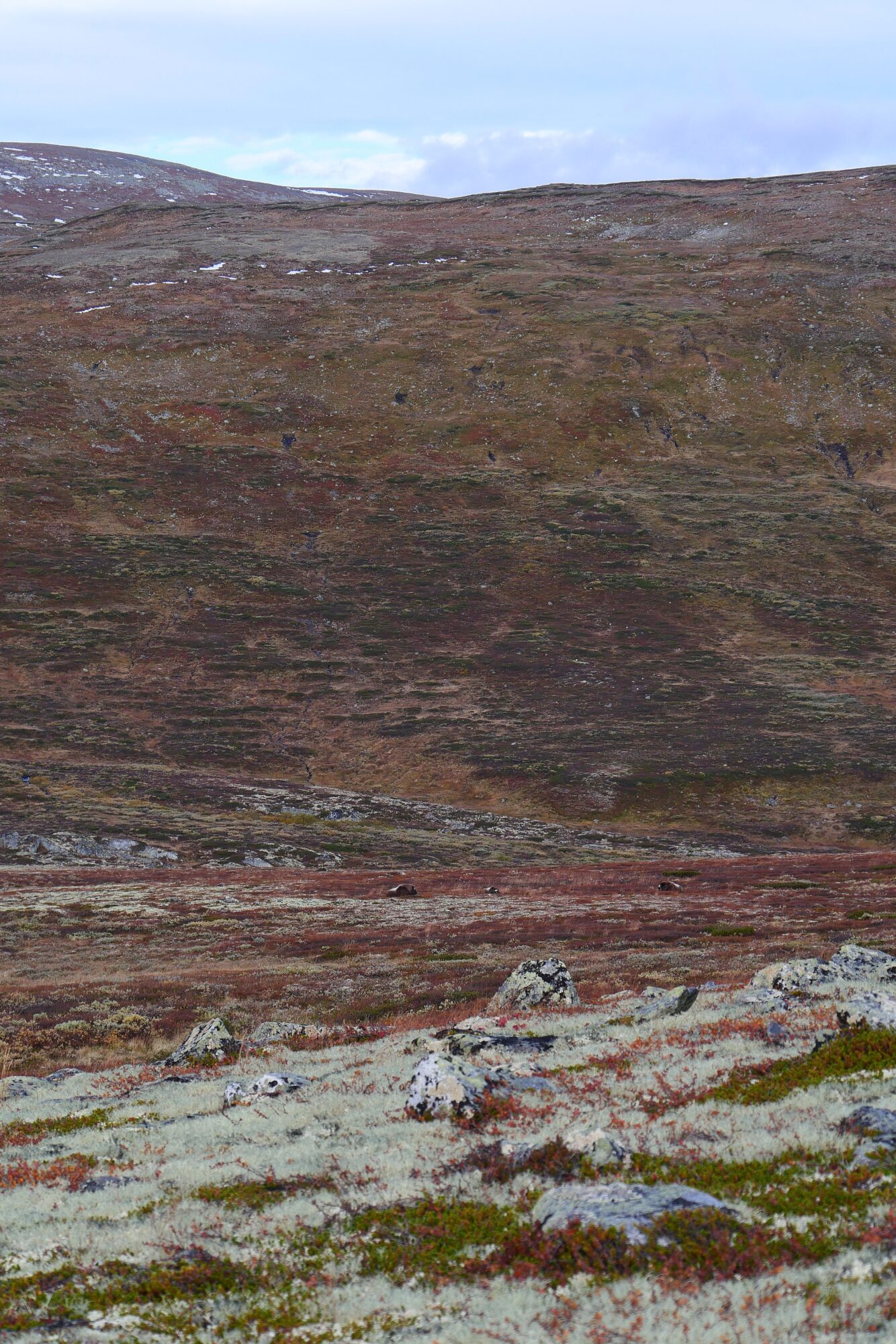
Once we reached the top, we left the Musk Ox Trail and went straight ahead, without any particular reason, simply because this spot was calling me. I had braced myself for hours of searching… but after only a few meters, three dark shapes started moving in the distance. I first checked through the lens, a bit in disbelief, before letting my joy explode—they were there! Two adults and a calf 😊.

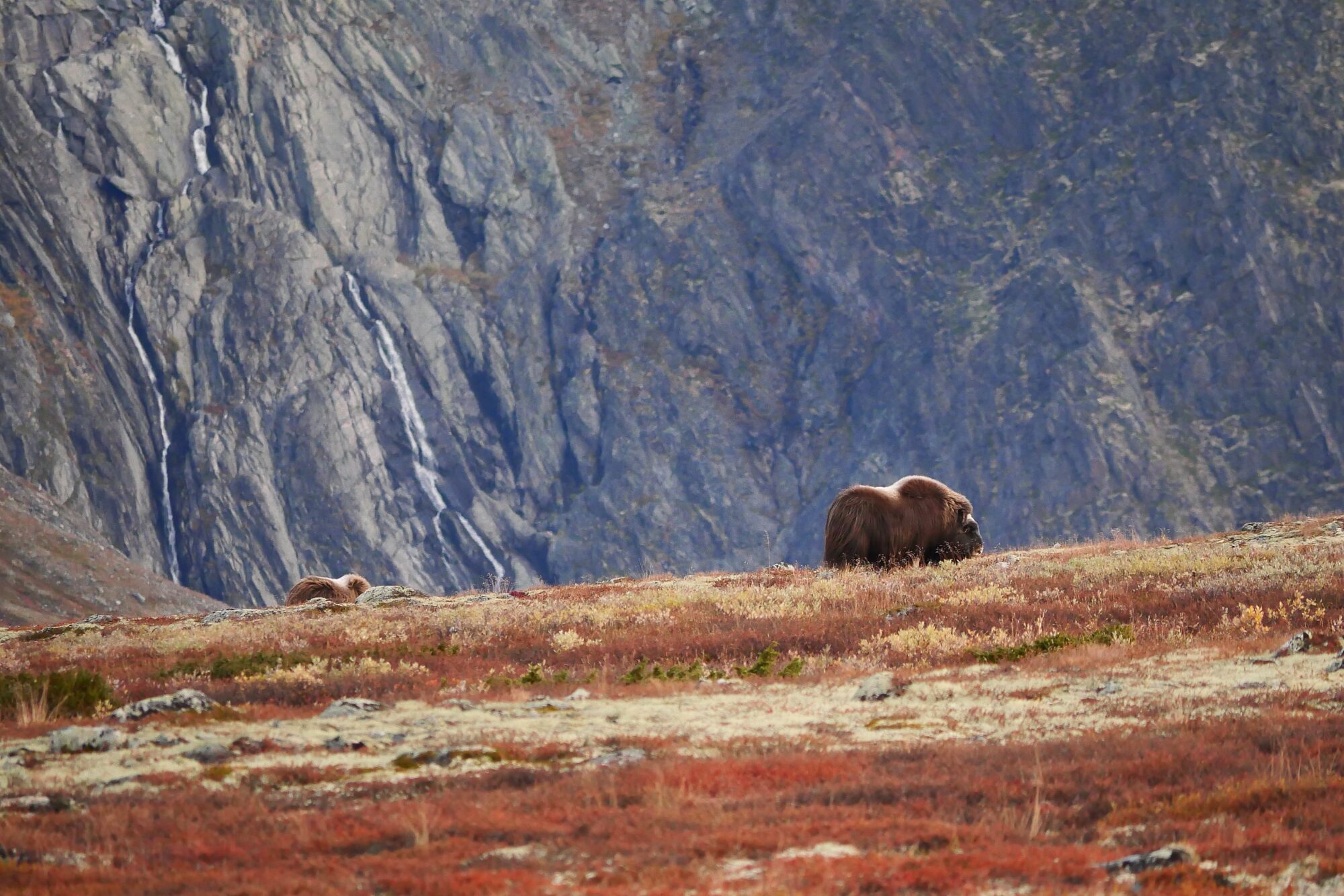
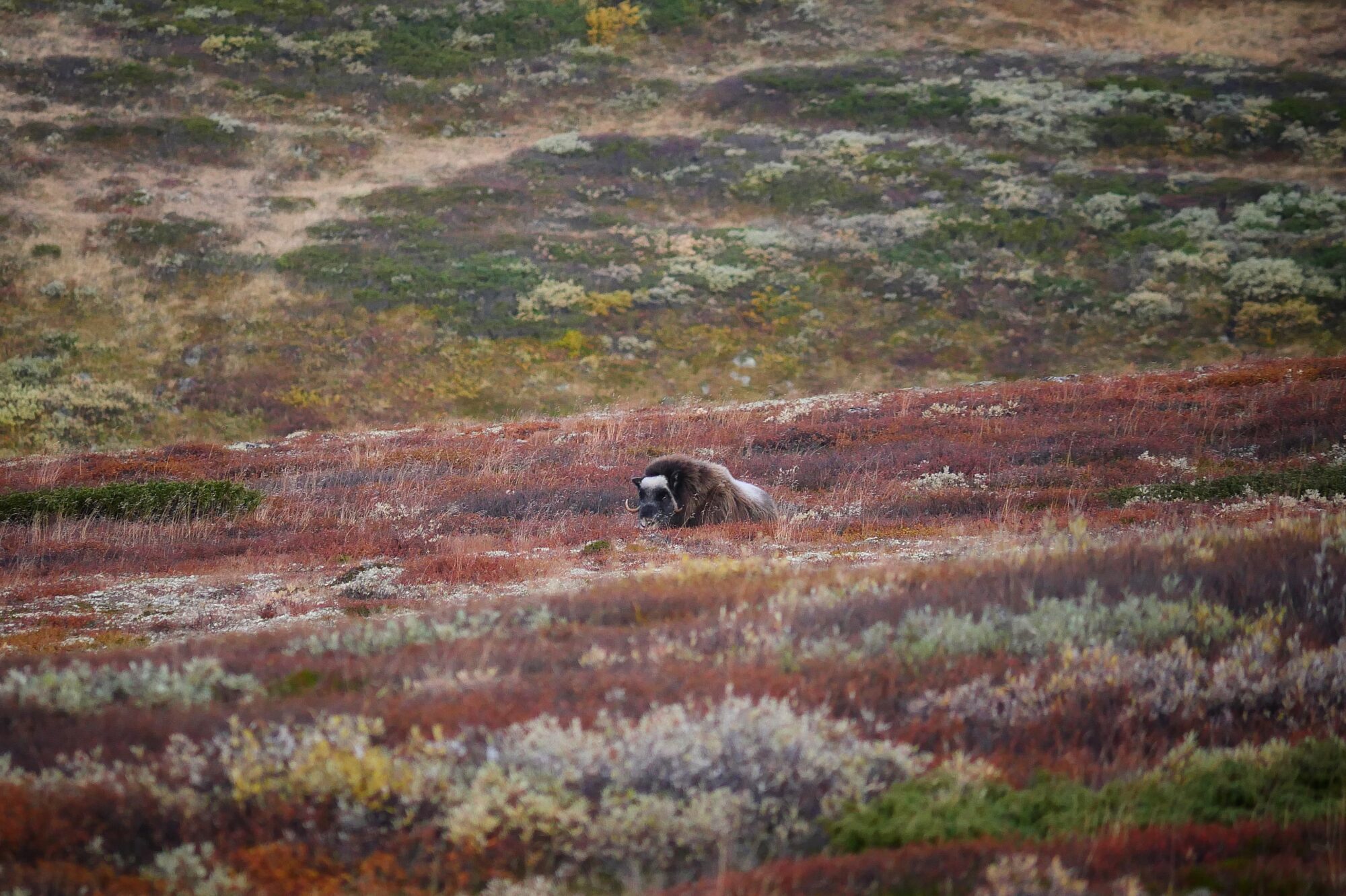
Since we were still far away, we decided to get closer—it’s amazing how fast I can move when I’m motivated 😉. We circled around them at a distance and sat down to watch. They, on the other hand, kept moving for a while before lying down in the tundra for a nap 😊.
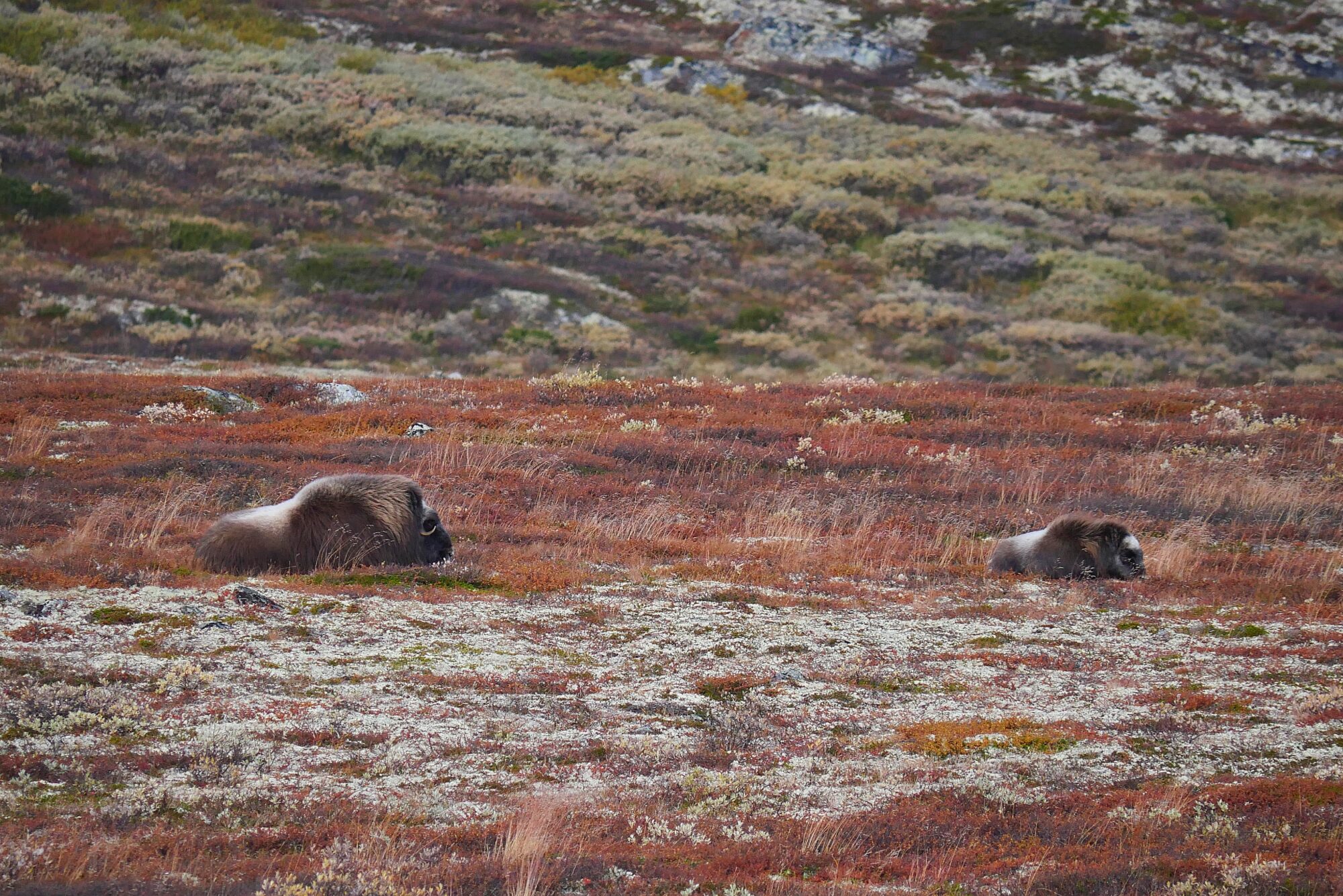
In the end, the cold got the better of us and we had to leave them, with heavy hearts but deeply fulfilled. Still euphoric from the encounter, we slowly made our way back down to the car.
Gear:
The plateau is barren and high up, with no protection from the wind. Even if the weather seems mild, bring warm clothing: we were quite hot on the way up, but the cold quickly sets in at the top. Also, wear sturdy hiking shoes, as it’s a steep climb and there are plenty of kilometers to cover.
Observation:
I was surprised to see that even the smallest rise in the terrain could completely hide them. For example, when we circled around them, they disappeared from view entirely, and hikers heading up to the viewpoint didn’t see them at all, even though they were just a few hundred meters below.
Equipment: If possible, bring a good zoom lens, as the observation distance is significant. My 100–300 mm lens still wasn’t quite enough to get the shots I wanted—another reason to come back 😉.